



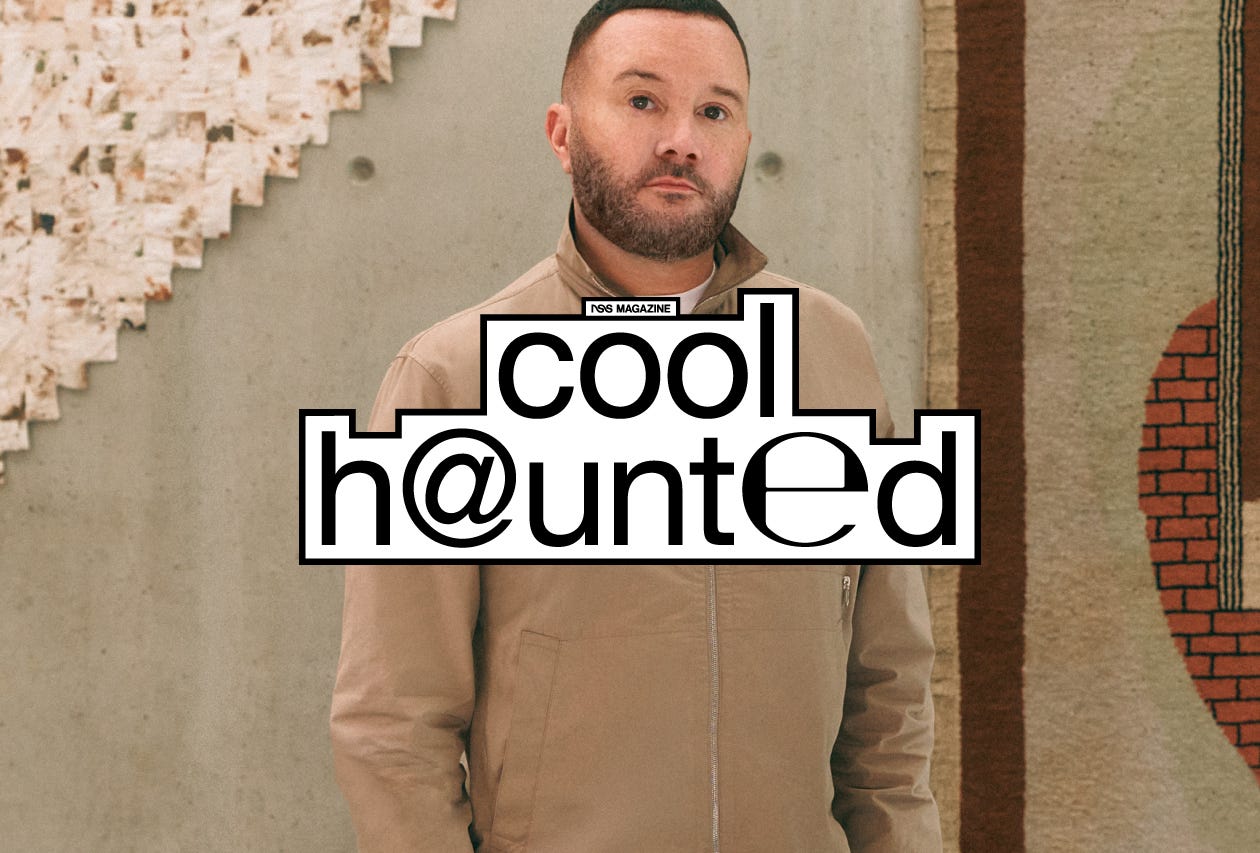
«I don’t know where it’ll go but I know there’s an opportunity for something to change and grow, which certainly wasn’t’ the case if we stayed or we remained with LVMH», Marc Jacobs said recently about the transition of his brand from the LVMH group to the more democratic G-III group. Jacobs is not an independent designer, but he wanted to break free from the luxury cage and look with greater freedom toward more democratic audiences.
Other designers from the LVMH stable or otherwise linked to other luxury groups have gone even further: Kim Jones has launched a new brand based in Hong Kong, Kris Van Assche has reopened his, Stella McCartney and Giambattista Valli have returned to independence by buying back their stakes, the same was done by Alanui and Giuseppe Zanotti; Phoebe Philo preceded them all, launching an eponymous brand (which still has LVMH among its investors) and, after having sold his Alyx to Adrian Cheng, Matthew Williams opened a brand under his own name for whose e-commerce he himself serves as the model. You can’t get more indie than that. Outside the LVMH sphere, Donatella Versace has launched a still-unnamed lifestyle brand, just as Olivier Theyskens has created Boloria.
If once upon a time you became famous on your own and then went to work for a big house, today it’s the opposite. You become famous at some major Maison and then strike out on your own. A trend that doesn’t go against the spirit of the times: more and more people are asking why certain creative directors with such a recognizable (read: repetitive) style don’t simply open their own brand instead of altering our notion of pre-existing brands. But why has this “old” generation of creative directors opted for independence right now?

Once again, Phoebe Philo is the great initiator of the movement. Launched on October 30, 2023, the brand of the great English designer arrived at a moment when all her former collaborators were rapidly conquering the most coveted creative seats in the industry. It was immediately clear that she wanted to do things differently: collections when she wanted them, with the products she wanted and at the price she wanted, with limited productions tailored to demand, without having to deal with stores, events and various fanfare. Her needs were more or less the same as everyone else’s.
Kris Van Assche wanted to return to fashion «on a much smaller scale, without imposing deadlines, doing everything in-house». Francesco Risso, who now collaborates with GU and introduced his Bureau of Imagination at Milan Fashion Week, wanted «to make real clothes for real people». Kim Jones, speaking of his partnership with Bosideng separate from his eponymous brand, talked about «products that people can wear, afford and love» and, as noted by The New York Times, he was disillusioned about his role in the luxury world and about the unattainable prices of the goods. Finally, with his new project Matthew Williams intended «to find the essential, to find new hope and creativity and all of it independently».
A generation of creatives who have reached the peaks of the market, seen the “panorama” and decided to go independent, with smaller projects, more focused on the product, more freed from calendars, appearances and protagonism. All these decisions are driven by a strong disillusionment: some want their clothes to have a real impact on the masses, others want to avoid the rhythms of a fashion calendar that is tiring even the spectators themselves, still others want to go back to doing their job, namely making clothes, without worrying about ten thousand other PR aspects. In short, they too are tired of the unjustified contradictions and pressures that have then led fashion into crisis. The answer is to do less, do it better, detach from the mega-conglomerates of the world. But how many of these independents are actually independent?

If it’s a cliché of the fashion capitals that having your own brand means having it as a second job (even Lee McQueen had to pour the money taken from Givenchy into his own brand to support it), it’s also true that the cliché exists for a reason. All the designers we’ve talked about do not have businesses that stand on their own, in fact, but are financed by the proceeds of other projects or by the capital of other financiers. The most independent of all, Matthew Williams, is still the current creative director of Oakley. Olivier Theyskens’ Boloria belongs to the Belgian group We Are One World which manages Tomorrowland, Donatella Versace’s new brand is financed by the Revolve Group and won’t even arrive in Europe.
Many of these designers have looked to Asia for their projects: Van Assche has an ongoing collaboration with Antazero, Jones has one with Bosideng (as well as collaborations with Aman Resorts, a car co-designed with the Chinese Avatr and a real-estate project in Hong Kong) and Francesco Risso has a lucrative contract with GU. All agreements struck with large companies outside of fashion and mega mass retailers that churn out quantities of goods and money that at this moment neither LVMH nor Kering possess. And Phoebe Philo?
Last January, an article by La Conceria based on a report by Glitz explained that, even though it holds a minority stake in Philo’s brand, LVMH finances it almost completely. «In 2024 the brand generated revenues of nearly 13 million euros. A significant figure for such a young project, but insufficient to cover costs, which exceeded 27 million euros. […] Since 2023 the group, through Sofidiv, has invested more than 45 million euros in equity and loans, effectively providing new cash injections almost every quarter». Which doesn’t change the fact that, still according to the same source, those 13 million nearly tripled in 2025, reaching 37 million euros. A success, then, but not an easy triumph and above all a launch that could not have happened without LVMH’s capital.

This shift toward independence by the great designers can only be called a trend after this experimental phase: the designers are highly seasoned, but their brands are young and still need to consolidate around the skeleton of a self-sufficient business. Nothing too strange compared to the industry standard: when it was acquired by Kering, Saint Laurent was in the red and came from years of speculation on licenses, while Victoria Beckham took twenty years to generate a profit, which only happened last August.
What the new-old independents are showing is that an alternative path to the world of the big conglomerates, more intuitive and less hindered by calendars, is possible. As Marc Jacobs explains, all these designers simply want to go back to making and selling clothes the way they want, with the suppliers they choose and with the growth strategies they want. Above all they want to take risks that the big conglomerates have neither the funds nor the courage to truly support. We are reinventing original fashion from first principles.
Now that the conglomerates no longer have unlimited funds and that even the doctrine of the creative reset has turned out to be an inexact science, with fluctuating results, fashion is entering more mysterious waters, perhaps more dangerous but also more interesting. It’s telling that today the clothes of these personal brands of the great designers appear more authorial and better thought-out than those produced in mass, distributed worldwide and often “disconnected” from the ones seen on the runway that the big commercial brands sell. These designers believe in themselves: but will the market believe in them?