



For entire decades, resort locations such as Capri, Taormina or Portofino were unchallenged domains of pure luxury, settings in which the Hermès or Prada boutique seemed almost part of the landscape, as natural as the sea or the jasmine. That image still exists today (perhaps more so for American and Asian tourists in perennial search of the Dolce Vita) but luxury brands with historic boutiques in Mediterranean holiday destinations are beginning to find themselves with a new kind of neighbour.
Over the past two years, a wave of premium and middle market brands have opened stores in the same resort locations where luxury once reigned unchallenged. Alo has arrived in Cannes and Saint-Tropez. In Taormina, following the arrival of Guess, forte_forte and Sephora Playa have also landed, alongside the takeover projects of Liu Jo and Tommy Hilfiger. Farm Rio has brought seasonal stores to Marbella, Capri, Saint-Tropez, Ibiza and Mykonos. Also in Capri, Orlebar Brown and LaDouble J have opened. Staud has arrived in Positano and Autry has signed a resort collaboration in Mallorca. But why?

 Tiktok failed to load.
Enable 3rd party cookies or use another browser
The aesthetic of the dolce vita has always been a cultural heritage of luxury, one of its founding languages. But when the places of this dolce vita fill up with tourists who still want their souvenir, two things happen: the first is that luxury ceases to be the sole interlocutor as the mix of brands and stores becomes democratised; the second is that the very idea of the Dolce Vita and the Mediterranean aesthetic changes, shedding its old aristocratic trappings and finding new images and references.
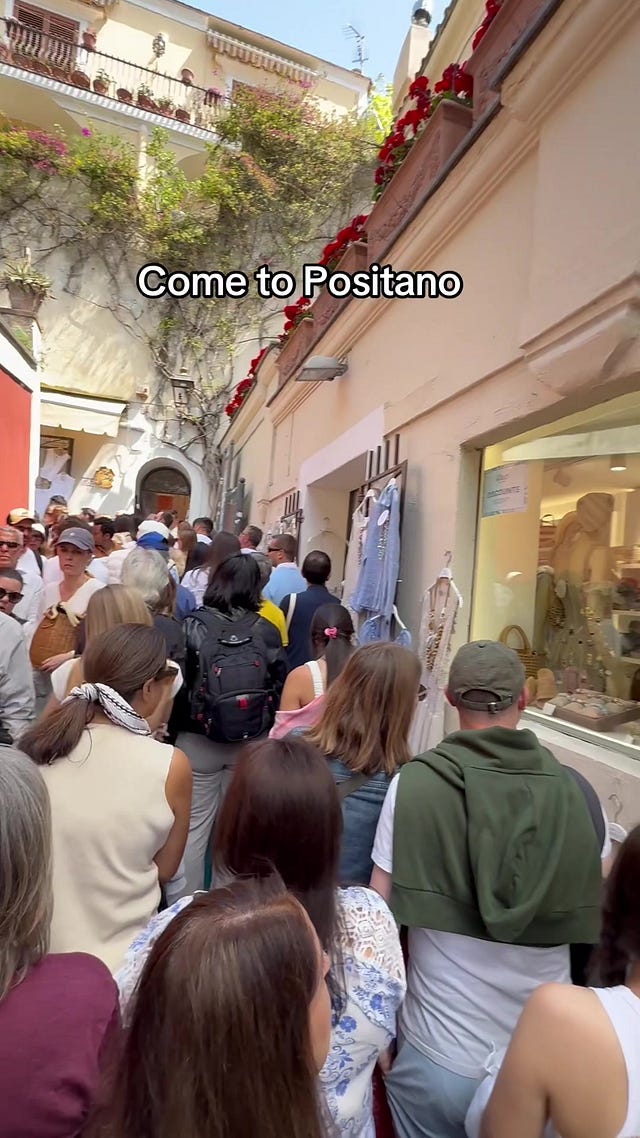
Indeed, given the degree of tourist cannibalism reached across the Mediterranean, places like Capri, Positano, Portofino or Taormina are no longer exclusive destinations — quite the opposite. All of these towns are overtourism destinations, submerged by flows of visitors arriving via Airbnbs split four ways, while the wealthy of old entrench themselves in their vast luxury resorts and panoramic restaurants.
The shift in audience also implies a shift in perception of the destinations themselves. This is followed with almost scientific precision by the evolution of the retail offering. In short, even the Dolce Vita has gone mass market with the conversion of entire local economies into pure tourist platforms. And the more democratic target of premium brands has begun frequenting the destinations that once were the bastions of the most exclusive luxury clientele, almost enclaves.

To understand the reasons behind this retail democratisation, one must look at what has happened at the top of the consumption pyramid. With rising prices and the systematic exclusion of the aspirational consumer who today turns to vintage, sales across fashion (with few exceptions) have become stagnant and the entire sector now finds itself in a crisis further aggravated by numerous geopolitical tensions.
Today luxury is trapped at the top of the pyramid, unable to come down, and premium brands have understood this. Roberta Benaglia, CEO of Style Capital — the Italian fund that controls Autry — said as much explicitly when speaking with Fashion Network: “The luxury segment above 500 euros is clearly suffering today, while the premium segment continues to perform very well.” Adding that “the sharp price increases [...] have profoundly altered consumer expectations. They no longer want to buy just for the logo; they seek quality, authenticity and the right price.”
Autry, the CEO continues, is aiming precisely to fill that market gap. It is doing so with the opening of a boutique in Cannes and the takeover of the Hotel Corazòn in Mallorca. Many other premium brands are following the same strategy: physically occupying luxury tourism locations to intercept both regular and fashion-conscious customers with a better value proposition and to capitalise on the so-called “cheerleader effect” of more premium commercial areas. Opening in Cannes doesn’t just mean selling in Cannes — it means becoming part of its myth.
As consultant Michal Kurtis observes in Vogue, the fact that a contemporary brand establishes itself in one of these locations “signals that the brand ‘understands’ the cultural and aesthetic mood, making it more relevant and on-trend for the aspirational audience.” But there is a second layer that cannot be ignored and is deeply intertwined with the first: the entry of these brands has gone hand in hand with a radical transformation of the destinations themselves, now perceived as more accessible by broader and more diverse audiences.

 Tiktok failed to load.
Enable 3rd party cookies or use another browser
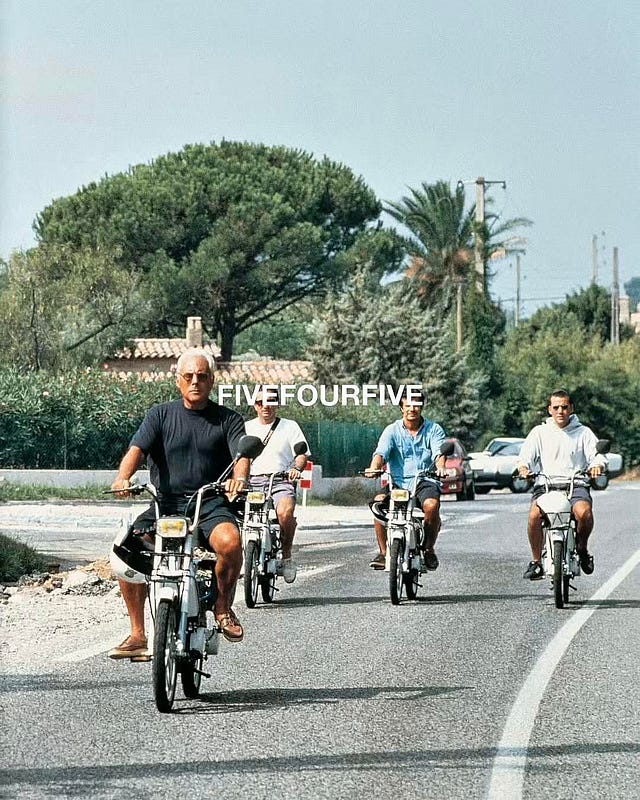
Ever since Aimè Leon Dore demonstrated, in the post-Covid moment, that the future of streetwear would head down the path of preppy aesthetics, many brands across lower and mid-to-high price ranges have leveraged their geographical proximity to resort locations to place themselves within the myth of the Mediterranean resort aesthetic. Pull & Bear has organised dinners and campaigns in Mallorca, Zara in Naples and along the Amalfi Coast. In the streetwear space, 545 has set summer campaigns on Lake Como and more recently in Pantelleria, an island once known as Giorgio Armani‘s summer residence, an old photograph of whom appeared in some of the brand’s promotional materials.
In Spain, Ibiza has become the regular location for annual activations by TwoJeys and Nude Project, where some of today’s most prominent celebrity influencers cruise between sailing boats and stunning villas with views, while Cold Culture and Eme Studios have set campaigns in Lanzarote. Danish brand Les Deux shot its latest spring collection poolside at a French château, Aimè Leon Dore promoted its latest summer collection from the pristine beaches of Koufonisia, one of the gems of the Cyclades, while Alo Yoga shot its Summer Atelier collection aboard a yacht in Cannes.
The myth of the Mediterranean, of resorts and of the euro-summer is therefore changing both its destinations and its audience, shedding the Old Money imagery that now belongs precisely to those premium brands that have begun colonising local shopping streets. Luxury fashion campaigns, in exchange, have taken on a more neutral and muted tone, favouring poolside or studio shoots (Gucci, Loewe and McQueen would be the exception) over the world of sailing boats and aristocratic coastal villages in Liguria or Campania.
Beyond the social considerations (and the overtourism turning Italian cities into theme parks is a serious matter), what emerges from this cartography of openings, pop-ups and campaigns is a signal of market vitality that deserves attention. This is no longer about brands aping luxury, but about a vast segment that is emerging and claiming its place — both physically on the commercial level and narratively through campaign imagery. In doing so, it is building new hierarchies of desire and new senses of belonging for a changing fashion audience. The Dolce Vita, in short, no longer belongs to luxury alone, but to those brands that manage to convince new generations of consumers to believe in their own young mythology.