



After extensive field analysis and microscopic examination, we arrived at the underlying disease of fashion management: short-term, indeed, ultra-short-term, strategies. A planning horizon that stretches only to the next quarter, a vision that lasts only until the next bonus. The short-strategy CEO (whom, for convenience, we will call ShortSight) optimizes the present, mortgages the future, and then presents both as a triumph, because by the time the bill comes due, it will already be addressed to someone else. The obvious temptation, of course, is to fire them.
Fashion’s ShortSights are not cured by replacing people, but by transforming their education. Not with yet another MBA or a more prestigious pedigree; fashion is saturated with pedigree and starved of ideas. What is needed is something else entirely: a profound external recoding.
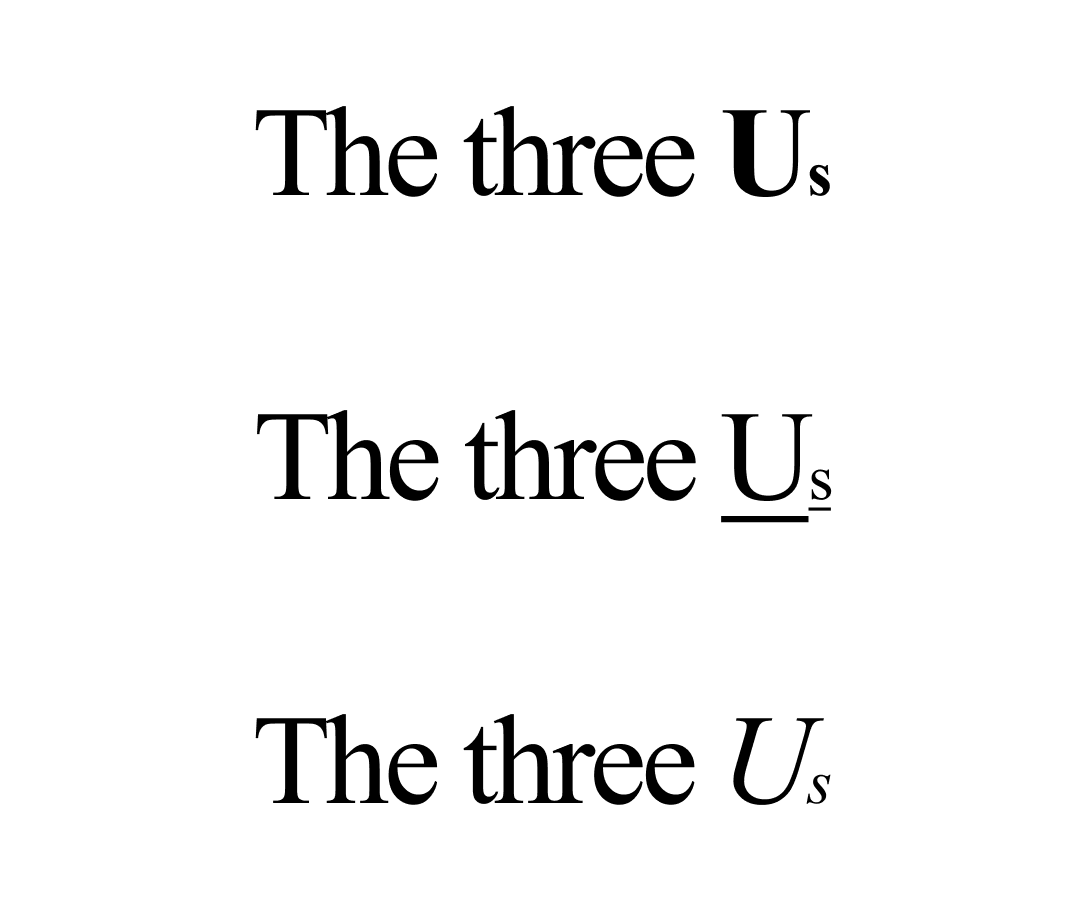
This recoding rests on three words that share the same initial letter and have no decorative purpose whatsoever. They arrive at exactly the right moment, because the new AI framework is rewriting the rules of work and stripping ShortSight of its last remaining alibis. Anticipating, interpreting, and synthesizing are no longer rare talents but the minimum requirement, leaving the short-range manager with nowhere left to hide: the machine already does, and does better, what he used to pass off as vision. What remains is only what the machine cannot do. And it is precisely there that the three U’s become the scarce commodity.
Humility of role
Humility of role means distancing oneself from the symbols of luxury, the right car, the right watch, the right table at the right restaurant, and understanding a physical law that nobody teaches: displayed prestige is inversely proportional to real authority. It means being visible in the company, on the sales floor and in the warehouse, instead of barricading yourself in a glass office answering only the emails that matter. It means staying informed about the world, not just about clothes, because those who know only their own collection, upon closer inspection, do not truly know even that. And it means having the stomach to study competitors and even respect them, rather than dismissing them with a joke over dinner: anyone unable to mention a rival respectfully has, almost invariably, failed to understand them.
Unity of values
Unity of values means, above all, the opposite of cliques and alliances: no factions, no camps, no private elevators reserved for friends of friends. A team united by values argues during meetings and then rows in the same direction; a company split into factions rows in twenty directions and calls its own shipwreck “politics.” Values are the only glue that holds under pressure. Alliances, by contrast, melt away at the first change of leadership, like ice cream left under the August sun.
Uniqueness of the team.
The uniqueness of the team is the only truly non-replicable asset, and it is built in two steps. First: bring out everyone’s talent, not just the usual four familiar names, because talent is distributed throughout an organization far more democratically than is convenient to admit. Second: raise the overall standard every single day, beginning with the quality of communication, the most merciless reflection of the quality of thought. People are chosen for who they are, not for the boxes they fill, and their uniqueness is protected rather than sanded down until they become as interchangeable as screws.
This is where the most delicious paradox emerges. In the fashion world of the post-luxury era, which I would define as autistically randomized, all signals without a message, all movement without direction, it is precisely these three U’s that reward new models of growth and a different generation of managers. People less interested in the labels on lunch invitations and more attentive to the details of individuals. While the old guard counts the seats around the table, the new one counts the right minds in the room. The problem is that, until yesterday, we rewarded the exact opposite and called them leaders. They were simply the ones who were best at looking like leaders.
It is on this foundation that the following framework is built.
1. Autonomy
The first competency is also the rarest: the ability to decide without asking for permission. Not from the board at every turn, nor from a consultant with every new slide deck. A CEO must own their authority, not borrow it on loan and keep it vacuum-sealed for fear of wearing it out. Those who cannot decide on their own do not lead the company: they merely keep it warm for someone else, who will eventually make the decisions in their place, by the hour and on invoice.
2. The Ability to Lead from the Ground Up
True authority does not descend from the organizational chart; it rises from the cash register, the warehouse, the showroom, and customer service. A leader who has never sold, never made a mistake with an order, never faced an angry customer head-on commands by position rather than by competence, and everyone can see it from a mile away. Leadership should be cultivated from the ground floor upward, earned rather than inherited by virtue of occupying the right office.
3. Cultural Proximity to Consumers
Not the target audiences on PowerPoint decks, people. What they watch, what they listen to, what makes them laugh, what they desire, and what they stopped desiring just last month. The cultural distance between those who design the product and those who buy it has become a chasm, patched over with market research skimmed diagonally between flights. A fashion CEO must live within the customer’s culture: we need people who can recognize consumers on the subway and who understand that consumers do not need luxury itself, they need the emotion of a promise.
4. Strong Functional Literacy
Being able to personally read, not delegate, a company’s income statement, cash flow, channel profitability, and understand the difference between pricing and costing, between depreciation and impairment. A business survives on EBITDA and cash. Anyone who understands only product, or is merely “good with customers”, is a guest in the boardroom, not the owner of the house. The strongest leaders often also have the advantage of a genuine technical background.
5. The Spirit of Improvisation
Improvisation in the sense of jazz, not karaoke. Knowing the structure so deeply that you can depart from it at exactly the moment it becomes necessary. It is not chaos, it is trained responsiveness. The market does not follow the fashion calendar, and a CEO who can operate only within the written score freezes the moment the music changes key.
6. Inclusive Listening
The most valuable signals come from those who are lowest in the hierarchy and furthest from headquarters, where information is still raw and truthful before it is cooked, plated, and served up the chain of command seasoned to the boss’s taste. Inclusive listening means trusting the periphery more than your inner circle, and being more suspicious of unanimous agreement than of isolated dissent.
7. Anticipatory Thinking
Thinking ex ante, the revolutionary idea of recognizing problems before they explode. Apparently too exotic a concept for an industry that has turned the autopsy into its preferred management method. The ShortSight CEO does not prevent problems; they comment on them. They arrive at the disaster scene with the solemn expression of a coroner and exactly the same usefulness. Long-range vision must be cultivated, even if many executives will inevitably be diagnosed with the very convenient condition of rent-seeking myopia.
8. Orchestral Vision
Conducting the entire score, EBITDA and product, retail and digital, people and technology, instead of endlessly strumming the one instrument you know by heart, usually public relations. Our management ranks are crowded with soloists convinced they are conductors: they wave the baton, the orchestra plays whatever it pleases, and they call the resulting noise “leadership.” Very few can actually read the score. Even fewer suspect that the score exists at all.
9. The Courage to Rewrite the Rules
The audacity to challenge a principle that everyone reveres as though it were a law of nature, simply because it was already there when they arrived. Rewrite the rules instead of following them more diligently than your predecessor in exchange for a reassuring pat on the back. But asking for courage from someone who built an entire career on never disturbing the status quo is like asking a courtier to abolish the court: they will nod, smile, perhaps even become emotional, but they will not lift a finger.
10. Agentic Fluency
Understanding AI for what it truly is, not buying yet another overpriced ERP system just to wear the innovator’s badge, nor outsourcing “digital” to the intern simply because they are the only person in the company with a TikTok account. Everything is moving ex ante; everything is becoming agentic. Fashion management responds with a fifteen-second dance video, convinced that it is enough to appear younger. Spoiler: it is not. Everyone can see that beneath the baseball cap is a grandfather dressed up as his grandson, and by then, even the grandson has already looked the other way.

There is, finally, one competence that is not a competence: symbolism. The new CEO must change both wardrobe and grammar. Less ostentatious luxury and more genuine casualness, less ceremony and more construction site. Not the armor-like suit that keeps everyone at arm’s length, but the clothes of someone ready to truly get them dirty. The leader we need does not stand on a pedestal, posing for portraits with the right lighting and a saintly air of inspiration. They stand inside the furnace of problems, where the real bread of the company is baked, and where, incidentally, bishops never show up. The pedestal is comfortable, of course, but from up there you can see everything except the floor that is collapsing beneath your feet.
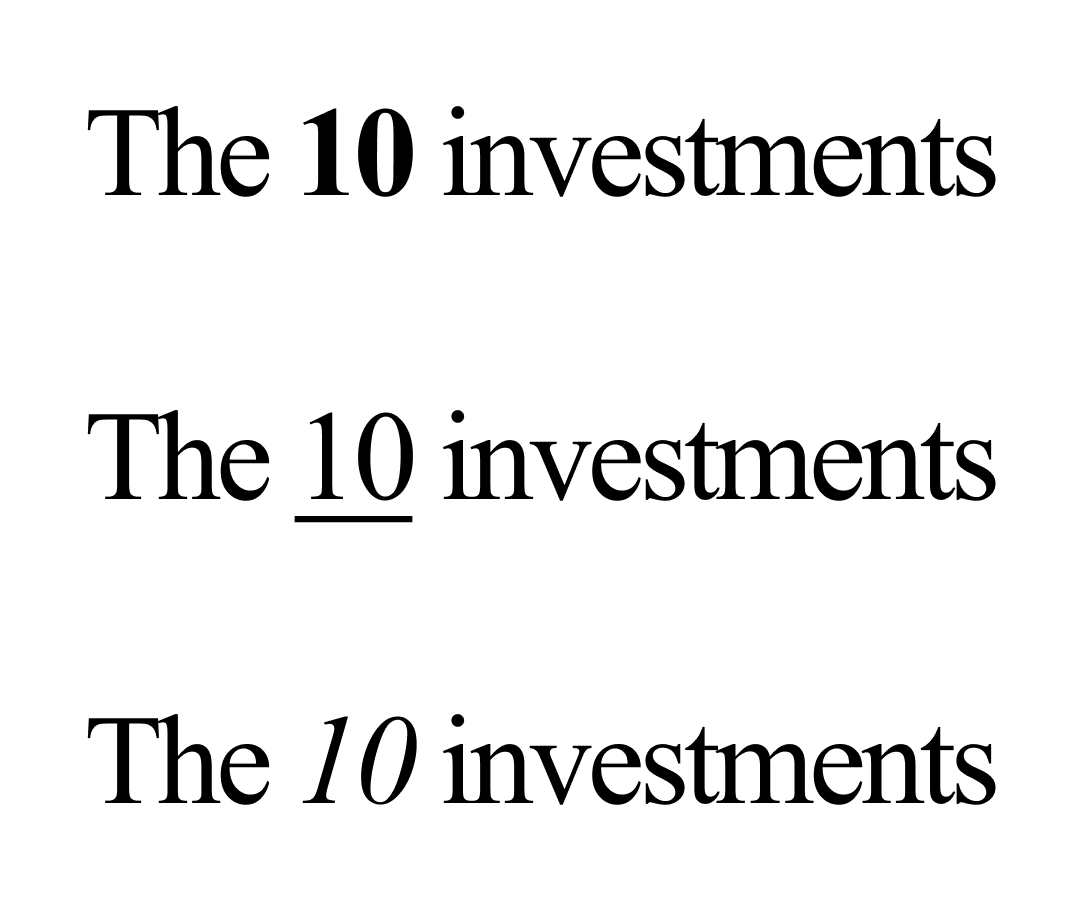
These ten investments are not a checklist for HR; they are a vaccine against the ShortSight CEO. Autonomy against dependence on consultants. Long vision against quarterly horizons. Literacy against bluff. Courage against ritual. And as their foundation, the three U’s: humility of role, unity of values, uniqueness of the team.
But the real question is not what a new CEO must know. It is what they must be made of. Temperament, availability, assertiveness, education. A personality infused with curiosity, the real kind that asks uncomfortable questions instead of collecting reassuring answers. A spirit of sacrifice that is not performed in interviews but visible in actions, and a chosen, not imposed, frugality, because ostentation in a leader is almost always the first symptom of insecurity: the peacock spreads its feathers precisely when it is most afraid. And someone capable of managing their agenda and anticipating priorities through a modular model.
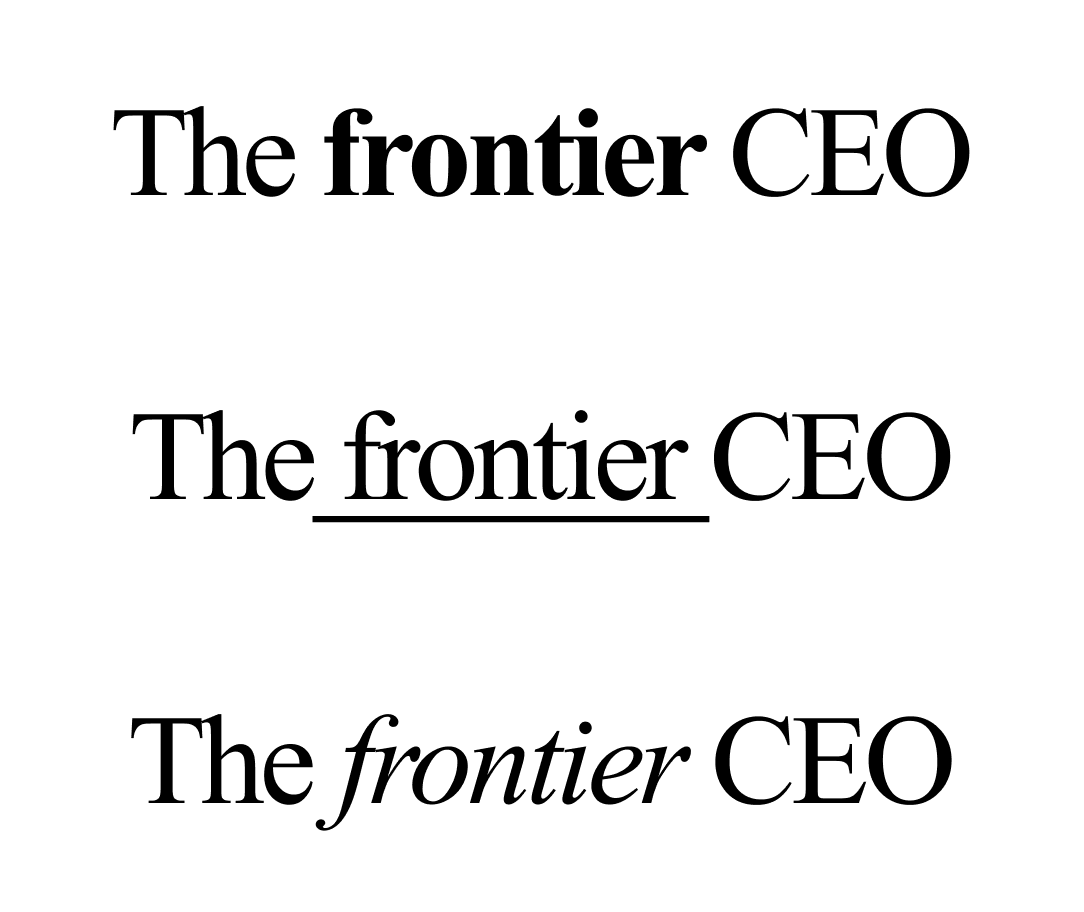
Finally, there must be an almost obsessive attention to younger generations. A new manager must already be in the field before the age of thirty, which today is almost impossible. Within three years, every company will have its own prompt management, its own grammar of work with machines, and therefore its own semantics: a unique way of naming things and making them happen. That semantics cannot be embodied by a bishop-like CEO, elevated and robed, who blesses from above and never descends from the throne. It can only be embodied by a frontier CEO, someone who walks the ground, able to stand on both sides of the wall, between clients and colleagues, between juniors and seniors, without feeling diminished by anyone.
This is the leap fashion has never had the courage to make: from the Euclidean geometry of EBITDA, precise and useful but desperately flat, to relativity, where a leader bends the company’s space and time instead of being bent by them. Not to ride the political shift of the month, but to demote politics to what it should be: an accessory, not the core of one’s value system. The day our top executives keep politics in their pocket and values in their hands, not the other way around, we will truly have stopped producing ShortSights. Not a moment sooner.