


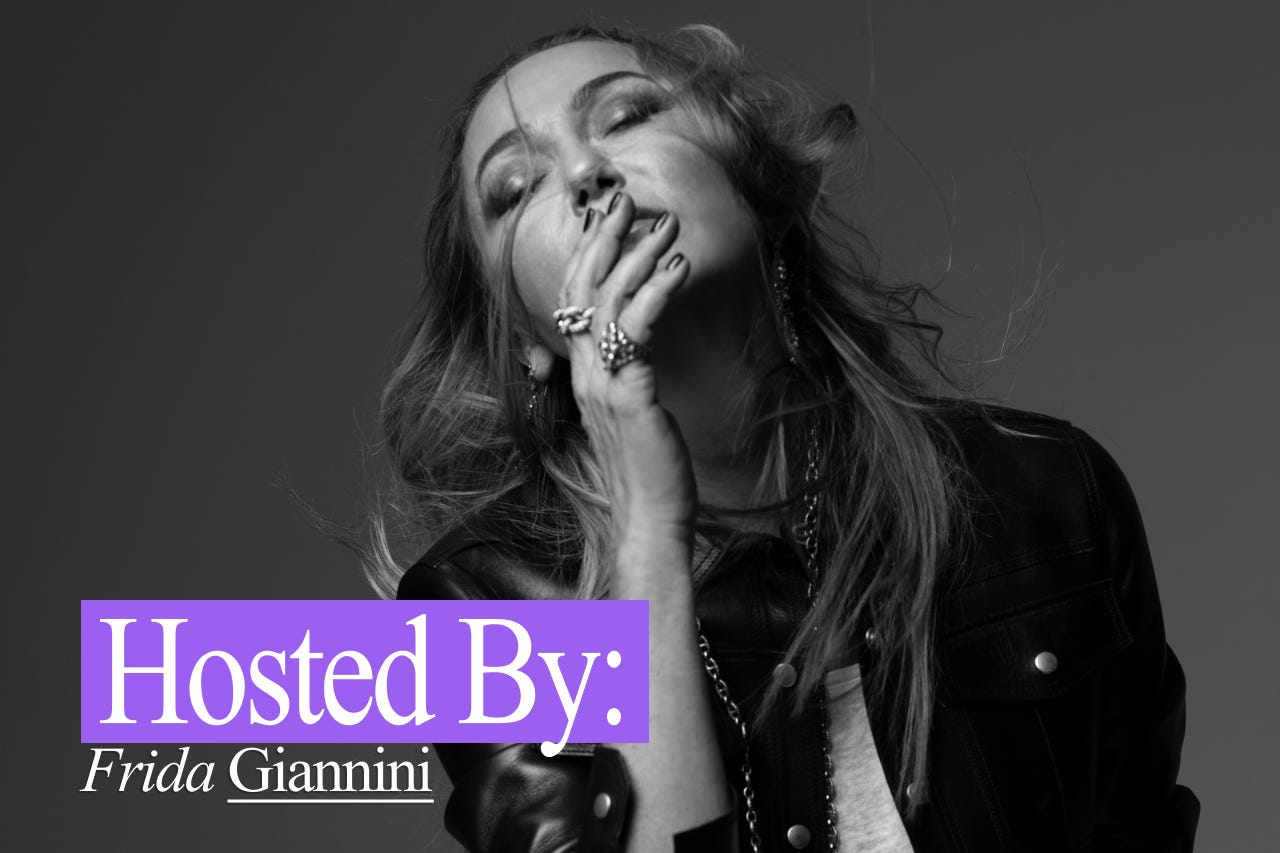
“No, I haven’t left it behind.” Frida Giannini immediately corrects the premise of our conversation: she never completely walked away from the fashion industry after Gucci. She continued working, choosing collaborations and turning down opportunities. In the meantime, she devoted time to her family and cared for her mother throughout a long illness. It was during those long hours spent waiting in hospital that she began writing A Journey into the Style and Music of My Icons since 1969, published by Rizzoli New York in 2023. In 2025, she designed a collection to celebrate Liberty London’s 150th anniversary and breathed new life into the bar she frequented growing up, now called Bixio Caffè Bistrot. Located in Monteverde Vecchio, the Roman neighbourhood where she, her mother and her daughter all grew up, the bar holds a special place in her life.
As she smokes one cigarette after another, Giannini describes herself as a “Swiss Roman” because of her punctuality, and explains how she always tries to lighten the mood with a joke, even after an argument, revealing a side of her personality that doesn’t necessarily come across on social media. And that’s where our conversation begins: with the desire to discover a side of Frida Giannini that her title as former creative director (and the longest-serving in Gucci’s history) doesn’t reveal.
When you Google your name, one of the questions that comes up is, “What is Frida Giannini doing now?” What led you to distance yourself from the fashion industry?
I was in love with Gucci. I felt at home there, and whenever I explored other opportunities, the spark was never there. I needed to take a step back because I had never really stopped working. Before joining Gucci, I had spent five years at Fendi, followed by fourteen years at Gucci, first as Accessories Design Director and then as Creative Director.
After leaving, I enjoyed spending time with my daughter and visiting cities I had previously only seen through a car window, but I continued working on collaborations. I also turned down projects that didn’t feel right to me, not just in terms of the brand itself, but the overall context. Still, I’m not someone who can sit around doing nothing. I also work in interior design, taking care of my own homes as well as other people’s.
In 2025, you collaborated with Liberty London. What was it like to return to a project of that scale?
I decided to do it after my mother passed away, partly to keep my mind occupied, and it was incredibly rejuvenating. I managed to create an LED tower reaching all the way up to the fourth floor inside Liberty, while everyone kept asking how we were going to pull it off and how the structure would stand. I had been to a Massive Attack concert in Naples, so I asked them who their lighting designer was. We’re friends, and we’d already worked together because they had created some tracks for one of my fragrances.
I love working directly with people, from pattern makers and tailoring workshops to metalworkers. I’m very much a hands-on person. Even today, I sketch coats directly onto the mirror with a white marker and use Patafix to position the buttons.
Looking back at your years at Gucci, is there anything you feel was misunderstood?
There was this rumour going around that I was a terribly mean person, when in reality I had something like a psychiatrist’s chaise longue in my office to deal with everyone’s daily crises, and I always had a great deal of respect for the people who worked with me.
Then I was labelled “commercial”, which to me is a positive word. I’ve never considered myself an artist who needs to hang their painting in a store. If something I’ve designed ends up sitting on a shelf, I see that as a failure.
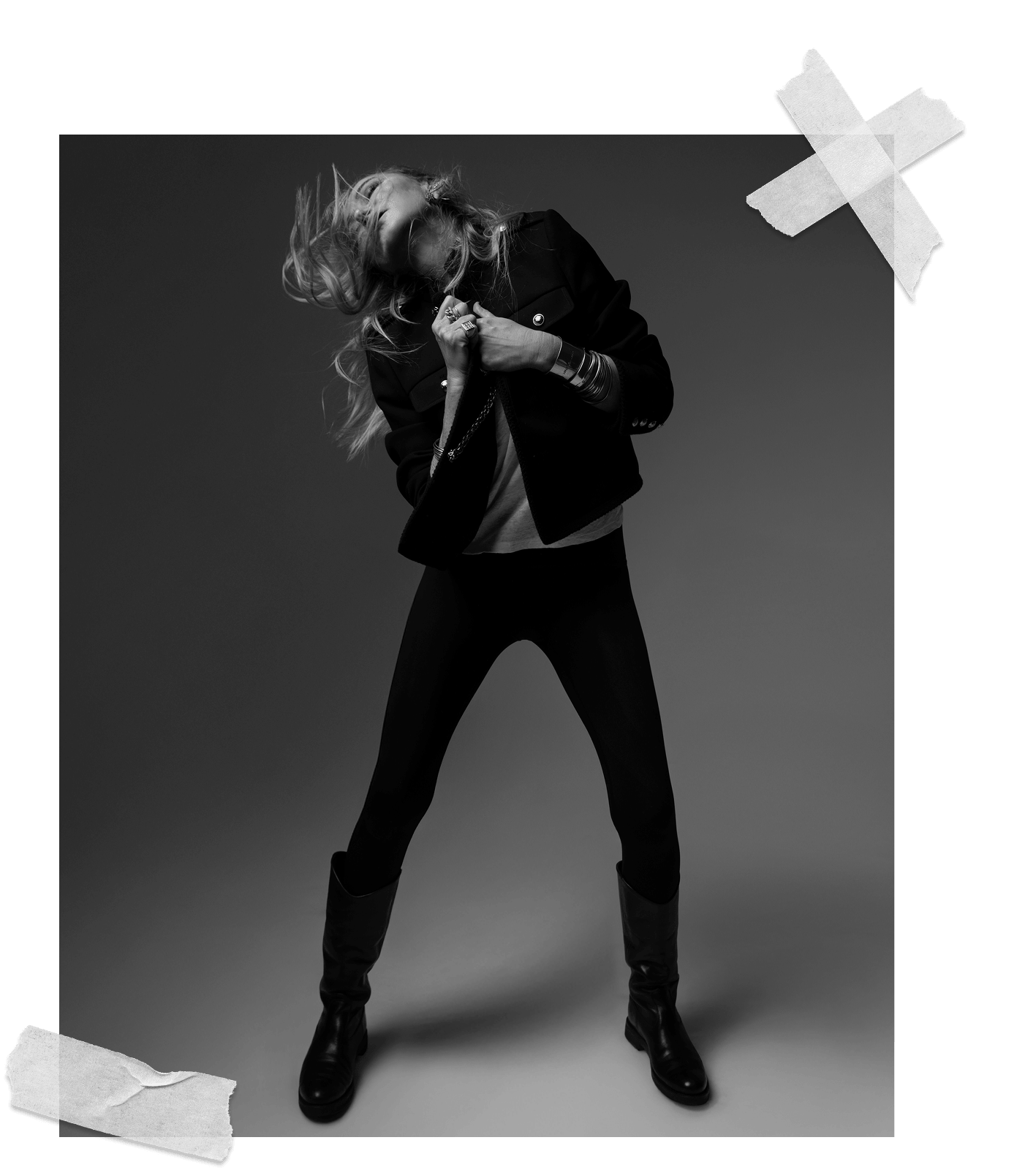
At the time, your work with the archives was criticised. Now that so many creative directors are revisiting the history of their fashion houses, how do you look back on those criticisms?
Back then, they called it a “nostalgia-driven exercise”, but I wasn’t simply taking pieces from the archive and putting them back into collections. I was reinterpreting them. I had already proposed Flora to Tom [Ford] two years earlier, but he didn’t like it. He thought it looked old-fashioned because he’d experienced that era himself, and not enough time had passed for him to see it as cool. My mother, on the other hand, owned one. Originally, it was the brand’s most famous silk scarf. I first reinvented it as a motif for handbags, then used it as a print and lining for the ready-to-wear collections.
I’ve always seen it as a “logo” without lettering, because you can create as many floral patterns as you like, but Flora is instantly recognisable. As for the horsebit, I brought my own horse’s bit to the factory. It was incredibly heavy, and I asked them to use it on a shoulder bag, then on a crossbody bag, and it worked. These are pieces of the House’s history that you have to work with creatively. You don’t just find them in the archive, already made and ready to sell.
You’re Roman through and through. Can you tell us about your decision to take over the bar in your neighbourhood?
I used to go to that bar before school. I’d get a cornetto and ask for tokens to play one of those early joystick video games. One day, my mother asked me what I’d been doing because I’d developed a blister, and after that she wouldn’t let me play anymore. I knew the whole family, and when they decided to sell, they chose me, telling me, “We’re sure you’ll turn it into a masterpiece.”
I bought the property and oversaw the renovation, even bringing in objects from my own home to decorate it. The day-to-day management is entrusted to people I trust, because that’s not my profession. But it’s a place I’ve saved, and one day I’ll leave it to my daughter.
In your book, you talk about your musical icons. What role do they play in your personal life?
I grew up with a DJ uncle, Daniele Vellani, and inherited his collection of around 10,000 vinyl records. But when it comes to David Bowie, I collect absolutely everything, from photographs to vintage books. Two weeks ago, Iman came over for dinner through a mutual friend, and she specifically wanted to come to my home because she knew about my collection.
When I showed her certain pieces, she was shocked. I had records and books that even she didn’t own, so you can imagine how thrilled I was, especially because we got to talk about him. I’ve met so many people over the years, but never Bowie. Unfortunately, he had fallen ill shortly before the exhibition dedicated to him that I organised at the Victoria & Albert Museum, which has now become a permanent exhibition.
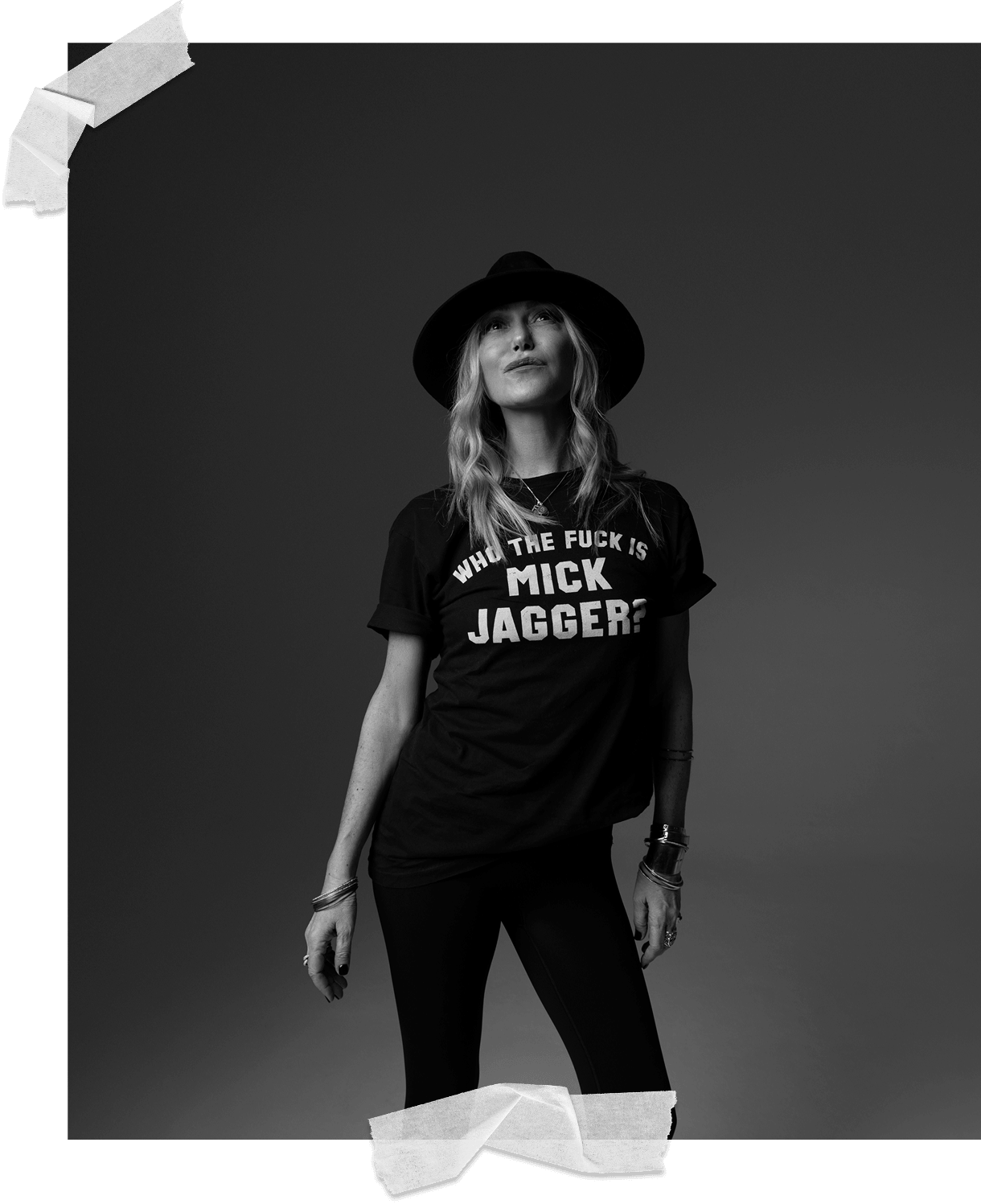
Staying on the subject of music, your Gucci woman had the attitude of a rock star. How much of yourself was reflected in her?
No matter how much you try to distance yourself from it, it’s only natural that a part of you finds its way into a collection. And if I love music, those influences are bound to come through. The music designer would send me tracks three months before the show, and during the final week in Milan, we’d spend two hours a day working on them because I wanted to be there to choose, edit and ask for different versions.
I would also try the clothes on myself to understand how comfortable they were and how they should be worn. No one knows how to design womenswear better than women. But you have to give a creative identity time to develop, especially because being Tom Ford’s successor was an enormous responsibility. I won’t deny that I spent a few completely sleepless nights. He came from Texas and I came from Rome. There may be horses in both places, but the riding styles are different.
On social media, you have a very direct relationship with your followers. How are you experiencing this new kind of exposure?
I’ve let myself get a little caught up in it, because as soon as I stop posting, people start asking why I haven’t commented on this or whether I liked that. And I enjoy replying, even to those who attack me. But I’ve also met one of my best friends through social media, and I’ve started having phone conversations with other young people that will lead to future projects. So I don’t want to shut down my account, just slow down a little.
Then there’s artificial intelligence, which really worries me. Someone sent me a video of myself punching other creative directors, and I found it disturbing, although at the same time I was laughing hysterically. I posted it ironically, and all hell broke loose, but that was absolutely not my intention.
Finally, is there something about yourself you’ve never shared before?
I could never be with a man who has ugly feet. I just couldn’t do it. That would be the end of the relationship. There you go, I’ve never said that before.