



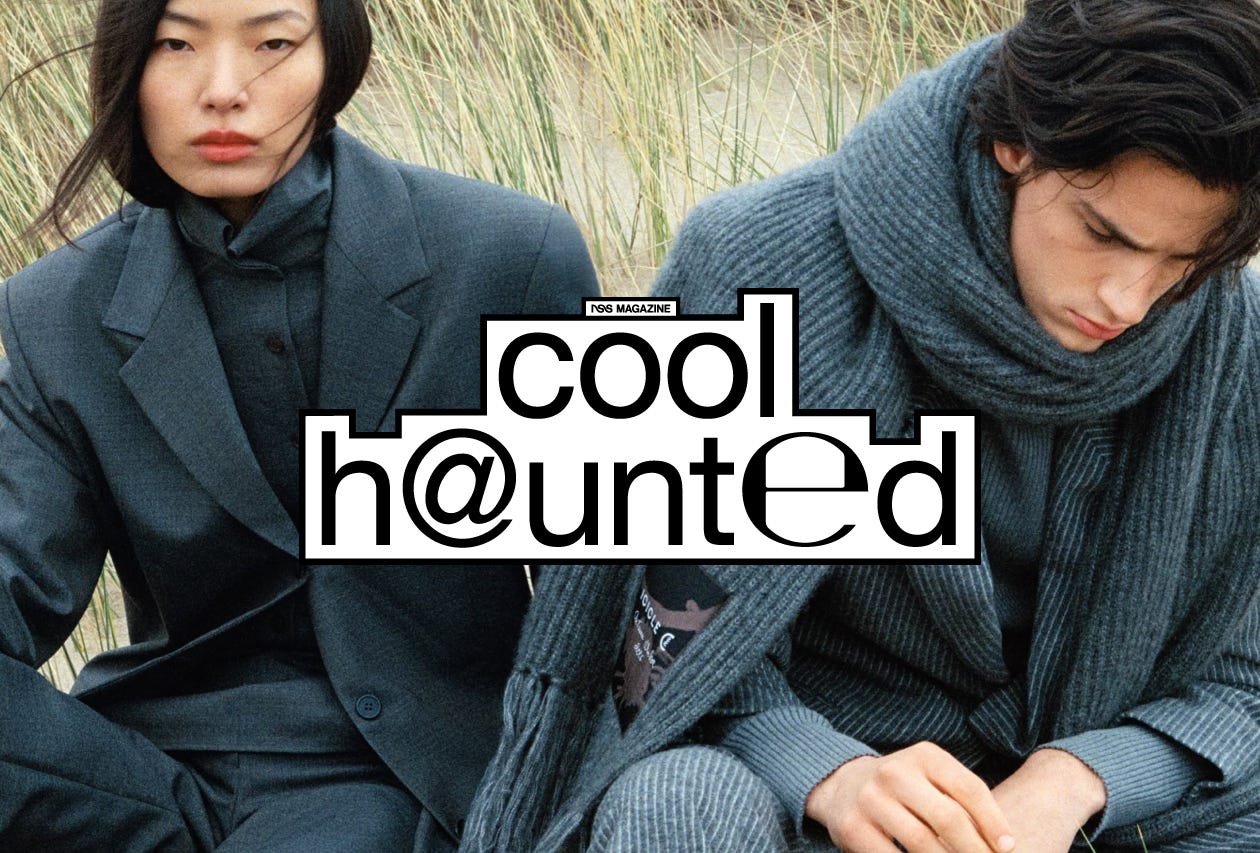
Last April, as part of its new expansion strategy in the Chinese market, Kering acquired a minority stake in Icicle, a ready-to-wear brand founded in Shanghai in 1997 that falls under ICCF Group alongside the French maison Carven. This is Kering’s most recent investment in China, following another in the jewellery brand Borland at the end of 2025 and the acquisition of another jewellery brand, Qeelin, which took place back in 2013.
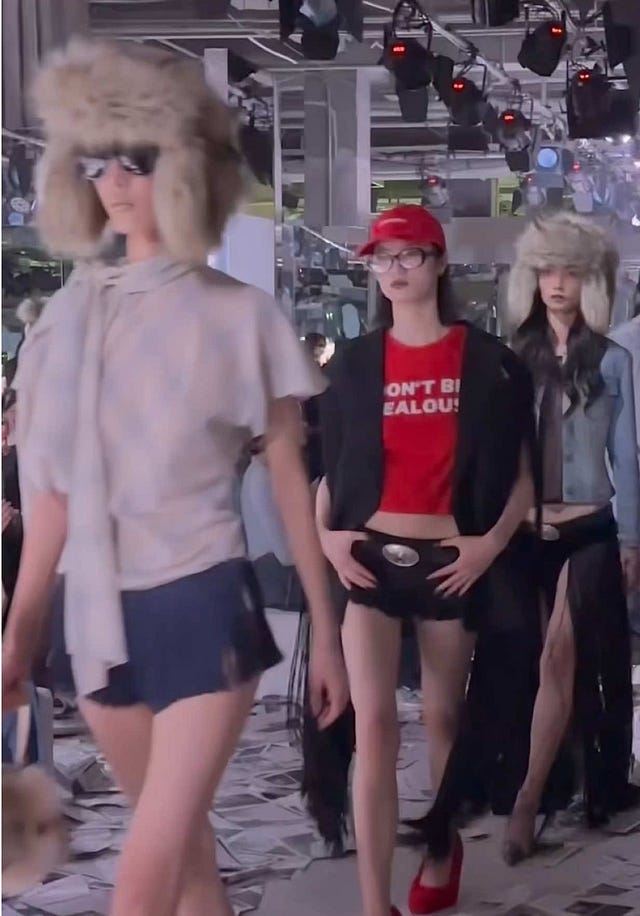
Five months after the investment in Icicle, ICCF Group appointed Sabato De Sarno — who served as creative director of Gucci from January 2023 to February 2025 — as the brand’s new creative director, with his first collection expected for autumn 2027. Incidentally, this luxury brand that has existed for thirty years and has owned a design studio in Paris for over a decade only made its runway debut in March 2025. A decision that, with hindsight, should have signalled that something was in motion.
Icicle has always moved with great caution in Europe: its first European store opened in Paris in 2019, six years after establishing a studio there; it was followed by three more locations in the city and a store in Dublin over the course of seven years. Now, more than a decade after the brand’s arrival on this side of the world, it has a creative director: not only is he high-profile and relatively “new” among luxury brand designers, but he also comes from the luxury group that invested in the brand just a few months earlier. It is impossible not to see a strategy in this choice. But which one?

 Tiktok failed to load.
Enable 3rd party cookies or use another browser
The puzzle that the luxury industry has had to solve (and has yet to solve) over the past two years concerns China and its consumers. For years, this great superpower managed to account for 35% of the global luxury market, according to Bain estimates. Today that figure stands at around 22%. The Covid-19 crisis played a role, but so did a series of broader shifts on the economic and social front that have led Chinese consumers to spend less, buy secondhand fashion, and above all to invest far more in Chinese fashion, bringing Shanghai Fashion Week to new prominence.
Everyone is hoping for a recovery in Chinese luxury spending, yet just this week Barclays, as reported by MF Fashion, forecast that fashion consumption fell by a further 10–15% in July alone. Barring exceptional cases, then, it seems unlikely that China will return to consuming the vast quantities of luxury goods it did before Covid-19. But European reports suffer from “survivorship bias” — they speak of declining Chinese consumption with regard to European brands, while saying nothing about local brands, for which the story is very different.
According to the National Bureau of Statistics of China, in 2025 clothing expenditure rose by 3.2% year on year. And of this titanic market worth 1.52 trillion renminbi, according to Frost & Sullivan data, Chinese brands account for 87.5% of consumption. This year, People’s Daily Online reported that Chinese national fashion, riding a wave of nationalism known as guochao (literally “national tide”), has created a market worth 100 billion yuan and a distinctive stylistic language rooted in the country’s cultural traditions and its brand ecosystem. And this brings us to the crux of the matter.
As explained by ThinkChina last April, local premium brands have been growing faster than their Western rivals for some years now. Commercially, Western luxury brands remain dominant in their segment, but Chinese premium brands are eroding market share, particularly among young consumers and through digital channels. The insight that may lie behind Kering’s decision to invest in Chinese fashion (something no other European luxury group has done so far) could be an attempt to capture precisely that growth. In short, those who want to profit in China must invest in China. And Sabato De Sarno’s appointment at Icicle is the perfect checkmate in that regard.

So, we have Icicle: a brand that has existed for thirty years with a powerful retail network of 200 stores, long specialised in fine fabrics, particularly cashmere. A brand perfectly suited for a creative graft, being split between two design studios, one in Shanghai and one in Paris, for over a decade. It is a brand extremely well known to the Chinese public, yet minimalist and chic enough to seduce a European one. Enter Sabato De Sarno: a name already laden with meaning for audiences and press on both continents, a creative whose story has captivated many, and a designer who has become known for his minimal approach. What better host?
His appointment is exactly the kind of hook that can propel the brand to new levels of relevance. Beginning to show on the runway is always a sign that a brand wants to elevate itself. Whereas the show of an unknown Chinese brand, however storied and solid at home, with an equally unknown designer in the West would have attracted limited coverage, hiring De Sarno as creative director guarantees coverage and curiosity. Not so much because Icicle has become familiar to Western audiences, but because De Sarno already is: the attention the brand will receive is, therefore, the attention the designer brings with him. By the same mechanism, Kim Jones‘s collaborations with Bosideng and Kris Van Assche‘s with Antazero introduced those brands to a European audience that had never previously heard of them.
Indeed, the somewhat uncomfortable truth is that the European press takes an interest in fashion brands primarily through a lens of cultural belonging: one follows more naturally those perceived as part of one’s own frame of reference. There is, today, no Chinese brand that is truly desired by the Western fashion audience in the way that French, Italian, or even Japanese brands are. Not because they lack quality or ideas, but for a matter of structural exposure: today it is more likely that press and buyers will know indie brands like Rier or Berner Khul, still unknown to the general European public, than an actual Chinese brand.
The idea that Kering wants to try to capture Chinese spending by investing in local brands, rather than selling Western brands in China or watching Chinese funds buy struggling Western houses, corresponds to a broader market trend. In recent years, Anta’s acquisition of a majority stake in Puma, that of Golden Goose by HSG, and Youngor’s acquisition of Bonpoint have all placed emphasis on the transfer of heritage and expertise, and on preserving the creative and operational independence of the acquired brand. Under Anta, Arc’teryx has nearly quadrupled its revenue since 2018 while keeping its creative direction outside China.
The failures on the other side of the ledger are equally instructive: Fosun’s Lanvin has lost roughly a quarter of its revenue since the acquisition; SMCP’s ownership under Shandong Ruyi collapsed into years of legal disputes and forced restructuring; Alyx was acquired in 2023 and has vanished from the radar; Sonia Rykiel, bought by a Hong Kong group with ambitions to expand in China and the United States, ended up in liquidation. The common denominator of these failures is the purchase of a Western brand in the belief that Chinese capital alone, combined with a well-known name, can guarantee success.
The Kering and Icicle move has flipped the script: it is a Western group investing in a Chinese brand that already knows its target market intimately, and introducing it to Europe with the assurance of an already well-known designer. At the same time, the prestige and visibility of Paris Fashion Week seem to promise an international expansion and recognition that will reward the brand in its home market. Whether this will become a replicable model, or remain an elegant solution to a one-off problem — namely, a prestigious designer who happened to be available at precisely the right moment — cannot yet be determined. The show has not yet gone on.