


There’s a line outside Chanel. A consideration that in itself doesn’t seem shocking but which, in the current state of fashion, has something almost revolutionary about it. Of course, in fashion districts around the world, a bit of a queue outside luxury boutiques is normal, perhaps less so in these times of crisis. But the fact that the arrival of a collection in stores worldwide drew so many people to line up to buy accessories costing thousands of euros has something extraordinary about it: it gives the feeling of having returned to more prosperous times.
The news of Chanel-mania in fashion circles has been covered by many international fashion publications: it’s rare, in a moment of sales crisis and sky-high prices, for the arrival of a collection in stores to become a phenomenon in itself. But perhaps the fascination this news has generated concerns its analog nature: it’s a fact that is not taking place online, it’s not an abstraction from a quarterly report but a human, physical, crowd event. But how did it develop?

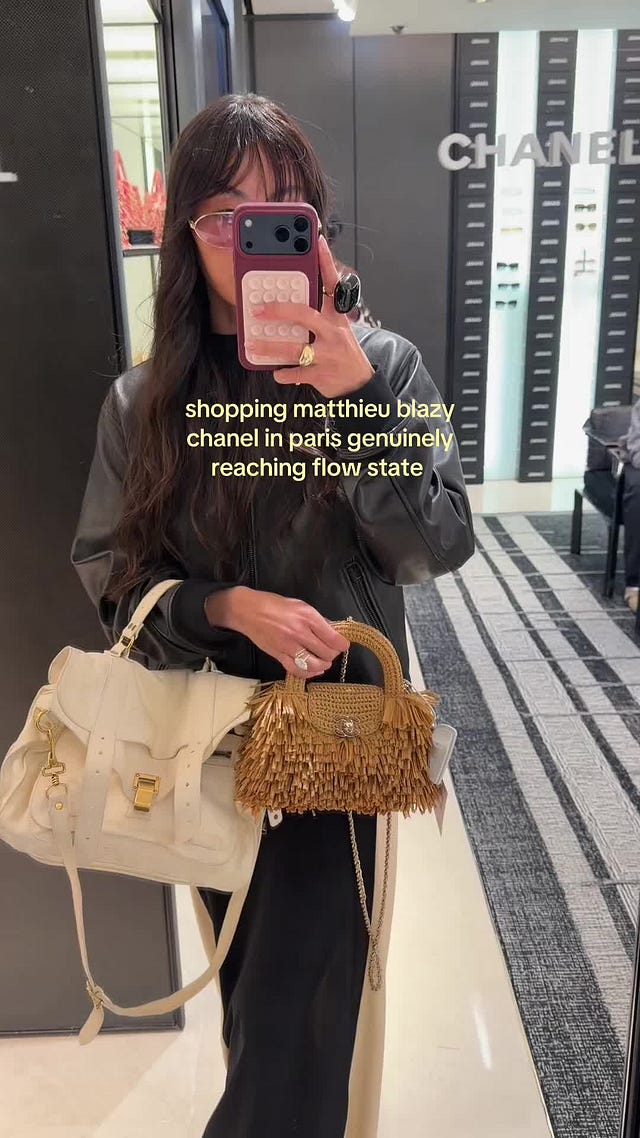
The absolute debut of the collection was in Paris on March 5. The timing was perfect: not only was every person who mattered in the industry there, not only was anticipation for the Chanel FW26 show sky-high, but the collection had finally arrived in stores, you could literally go and pick it up. The stores were stormed. This is where the Chanel-mania narrative was established: the first reports from editors, stylists, and influencers arrived; the first stories of celebrities spotted in the store and accounts of fabulous and mysterious historical clients booking exclusive appointments and clearing out shoes and bags. Then came the show with all its media buzz.
A week after the absolute debut in Paris, now that everyone around the world who wasn’t in the city was eagerly waiting, the collection arrived in stores in London, New York, Beverly Hills, Bal Harbour in Florida, and also in Asia. The creator Laura Jung, in a video posted on Threads five days ago and three days ago on Instagram, said she went to Japan, to the Ginza store in Tokyo, where there were no kilometer-long lines and all sizes were in stock, unlike in Paris.

Beyond the huge attention the collection received, and the many stunned comments from journalists and online commentators, it’s easy to see how the progression of releases, gradually wider, seems to have been intentionally designed to create an initial frenzy with international resonance, pushing both potential clients and mere curious onlookers to want to visit the store and be part of the collective experience. Instead of publicizing this roll-out, the brand let the public do it themselves.
A semi-organic approach to the timing of releases that turned the public itself into the advertising medium, so to speak. Let’s say the approach is semi-organic because on one hand it was planned, but on the other it heavily relies on user-generated content, not based on media materials but on the tangible, in-store product. Indeed, the tangibility of the experience (the lines, the clothes tried on, the fitting-room photos, and so on) was the real novelty of this commercial roll-out. And so we can’t help but wonder: has Chanel’s in real life success made us realize that the rest of fashion is a bit too online?

 Tiktok failed to load.
Enable 3rd party cookies or use another browser
For decades, fashion has relentlessly tried to conquer mass culture. The problem, however, is that it’s difficult to advertise to the masses and then sell to a narrow elite. This has led in recent years to the disappearance of aspirational clients who, amid dupes, premium brands, and second-hand platforms, have bought fashion everywhere except in luxury boutiques. And perhaps that’s fine with the brands too, always anxious to position themselves high in the market. By doing so, however, they have turned fashion into a more visual than tangible phenomenon: for those unfamiliar with boutique shopping, fashion is largely incorporeal.
Beyond the wealthiest clients, who are necessarily few, the vast majority of the public consumes fashion only on a visual level: runway videos, photographs and archive magazines, museums, and so on. All the ritual of boutique purchasing and customer service, but also the simple act of holding products in one’s hands, are aspects of fashion alien to those who don’t have the budget to enter a boutique. The same goes for the hidden world of client-only events, collection previews, dinners, and various exquisite experiences that ultimately represent the concrete luxury experience beyond the mere purchase.
 Tiktok failed to load.
Enable 3rd party cookies or use another browser
If fashion can be bought through shortcuts, the concrete experience of luxury remains inconceivable for the non-client public: a situation that has led to a kind of disaffection between brands and the general public. Important clients remain, but casual visitors disappear. This is also why, in their latest drops, Chanel but also Dior and Gucci have addressed the pricing issue by producing more bags under the €4000 threshold and expanding entry-level products such as belts, scarves, and wallets, as illustrated by BoF. Prices haven’t exactly dropped, but the price range has broadened to also entice clients who simply came in to browse.
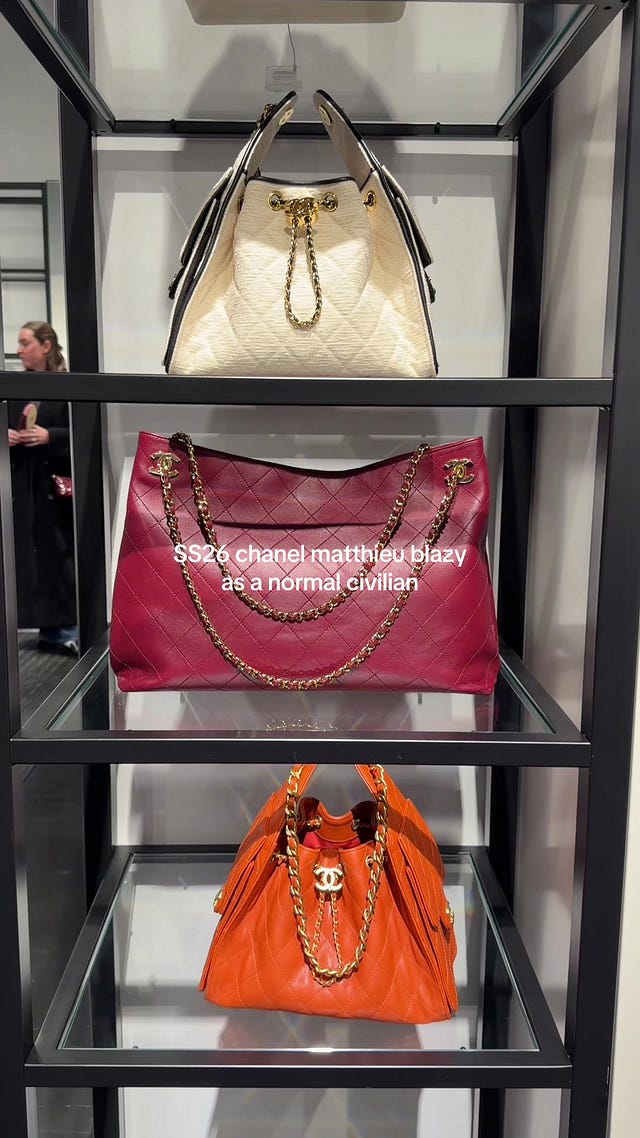
Both with Chanel and with Gucci, where the first press reports are starting to arrive, turning the arrival of merchandise in stores into an event dissolves hesitations and effectively pushes new potential clients into the store. Once inside, even those who don’t normally spend those amounts find something extremely expensive but accessible—particularly true for shoes, which have indeed been among the most talked-about products overall.

The current hype around Chanel isn’t coming from viral campaigns or meme moments. There are people in stores who are actively buying and sharing their shopping experience with the entire world. Above all, the product is front and center. In the various reports being read, one notices the presence of an extinct species: aspirational clients. Young professionals, or anyway clients making their first Chanel purchase, but also simple curious people who went in to see everything in person.
What makes this phenomenon rare is that it almost never happens for a collection to be so anticipated that it pushes people (and not just wealthy, revered clients) to go in person to touch and feel the products. The “miracle” of Chanel-mania is that it broke down the invisible barrier that often prevents non-experts from entering boutiques and, in general, separates those who look from those who buy. And here we get to the point. By bringing the narrative down to the store level and the product on the shelves, Chanel made the collection real for a much wider audience than regular clients, solving (perhaps unintentionally) the disconnection that fashion has with real, flesh-and-blood people.