



The day after the Bottega Veneta Milan show, whose closing look was a sweeping dress draped around the body and held in place by a clasp at the shoulder, creator Angelica Hicks posted a TikTok parodying the look by wrapping a black bedsheet around her body and simulating, with tights and a black silicone oven mitt folded under her arm, the accessories worn by Kendall Jenner. Beyond the humorous aspect of the video, it’s curious to note that there’s a kernel of truth in the joke: several garments seen on the runway in London, Milan, and even in the very first days of Paris were all drape, with minimal or barely visible construction, and a tendency to envelop the body in a way that is total yet fluid.
Of course, these garments were not all alike, but they were grounded in a more or less common principle: the movement or flou of the garment in question was loosely controlled, almost deliberately naturalistic, since these pieces, in their various ways, were made up of masses of fabric dramatically draped and wrapped around the body. In many different cases ornamentation was minimal, as the knot, the folds of the fabric, and the astonishing lengths that resolved into a cape were the protagonists.
The trend is particularly curious. What aspect of our modern culture, or what market demand, has pushed so many different designers to propose garments of this kind? Garments built with little or no internal structure, where the fabric is simply wrapped, folded, knotted, or left to fall freely over the body? More than a true trend, this sheet-dress phenomenon seems to be a kind of recurring concept — always essentially the same — that different designers arrive at by their own separate routes. But let us proceed in order: in which collections have we seen this garment?

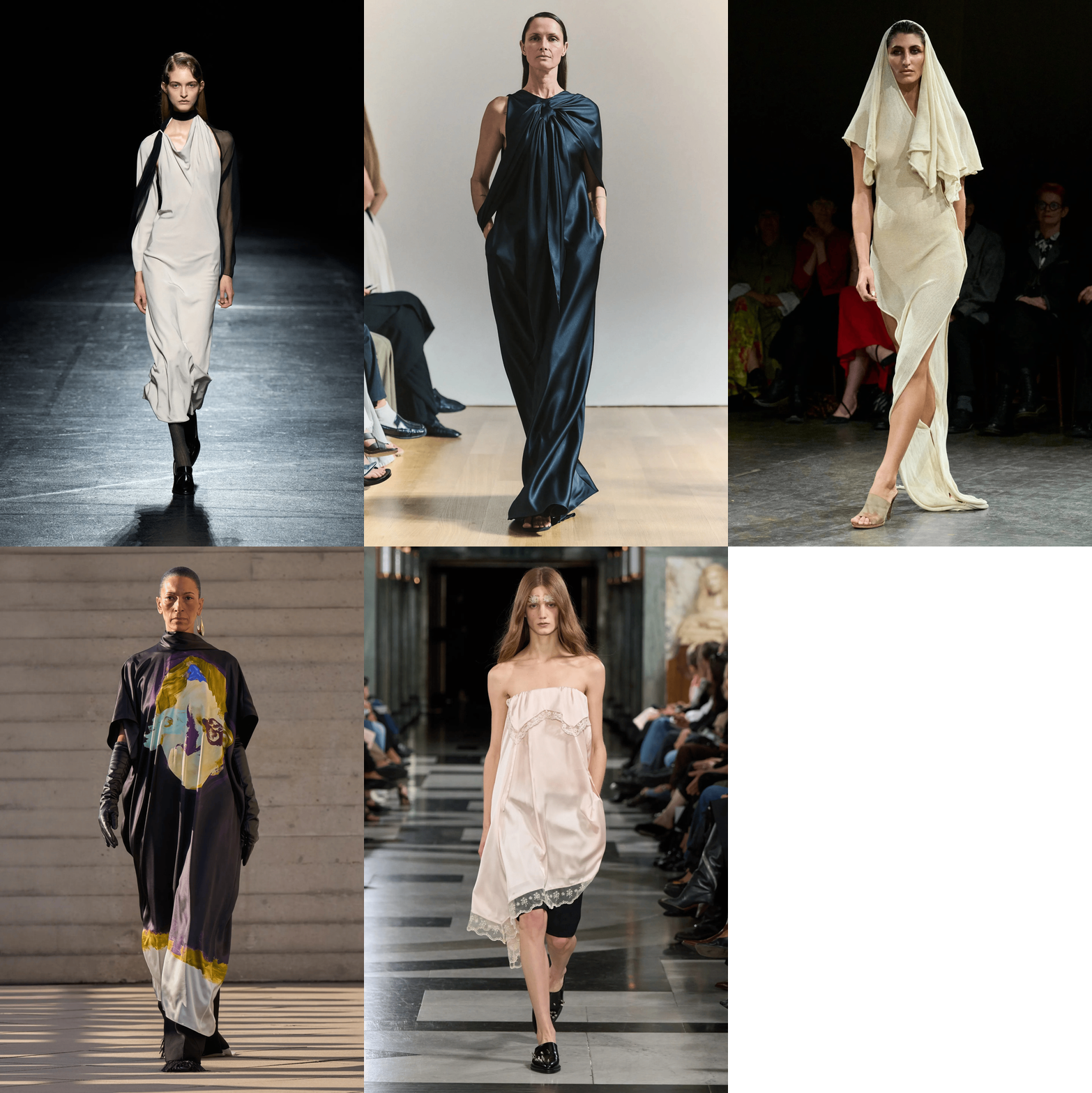
Beyond the Bottega Veneta show, the sheet-dress appeared in an early form at Boloria‘s pre-summer show, as a variation on the halter dress, paired with a sheer black gauze shoulder cover. In New York, Brandon Maxwell showed one in heavy blue satin, knotted at the model’s left collarbone, while in London we saw several, particularly at Paolo Carzana and Roksanda, while Simone Rocha reinterpreted it as a kind of cocktail dress complete with a lace hem, like a genuine bridal trousseau sheet.
Moving to Milan, the style multiplied and varied in many different ways. Certainly the Gravity Dress that closed the Gucci show, constructed with a single seam and held in place by a metallic droplet acting as a weight, pendulous behind the left shoulder, was one variant. At Jil Sander we saw an atypical variation — a balloon dress inspired (as @insidethemood revealed) by Norman Norell, which therefore had a precise shape of its own but became a kind of sheet at the back, billowing with air.
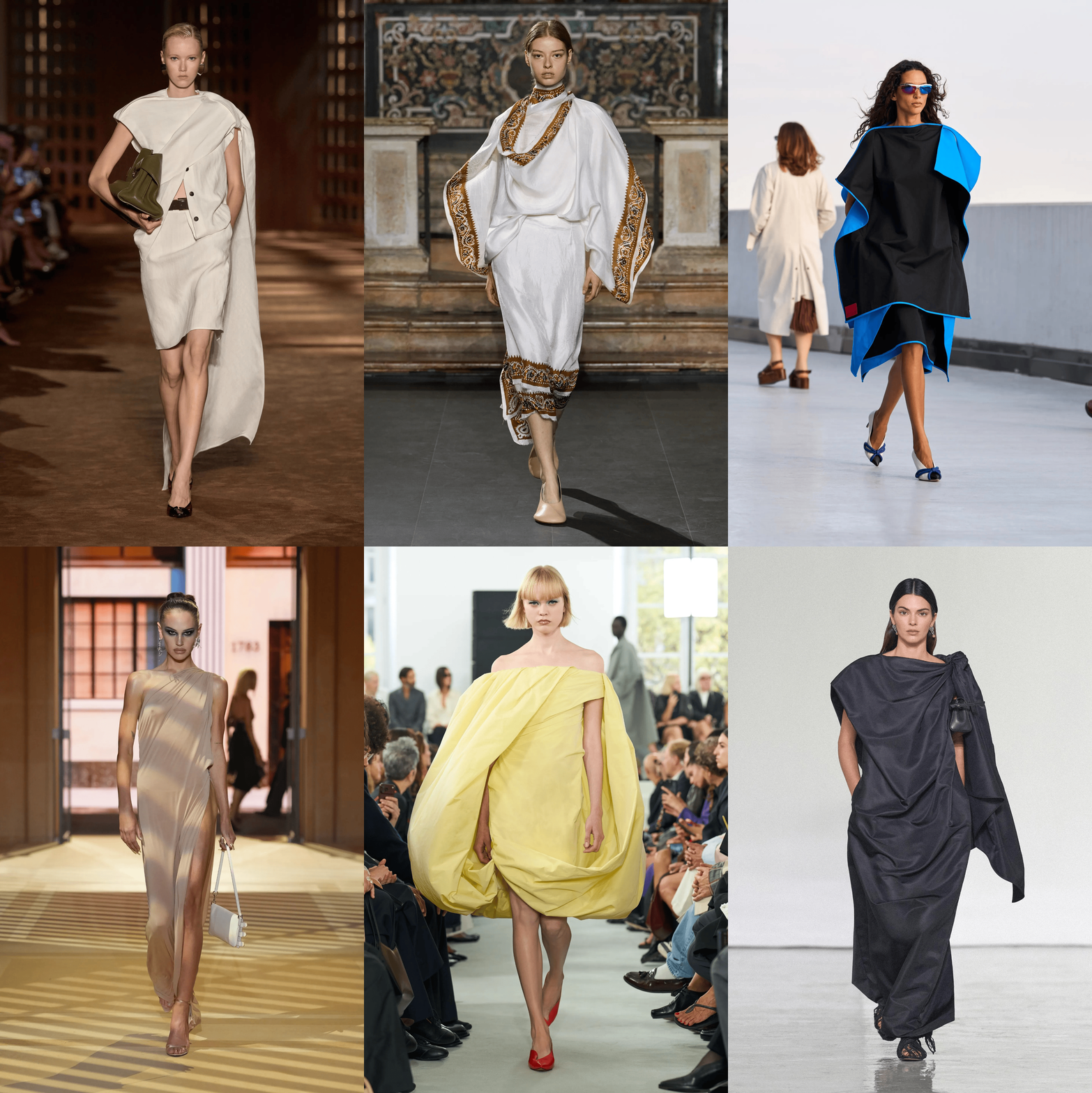
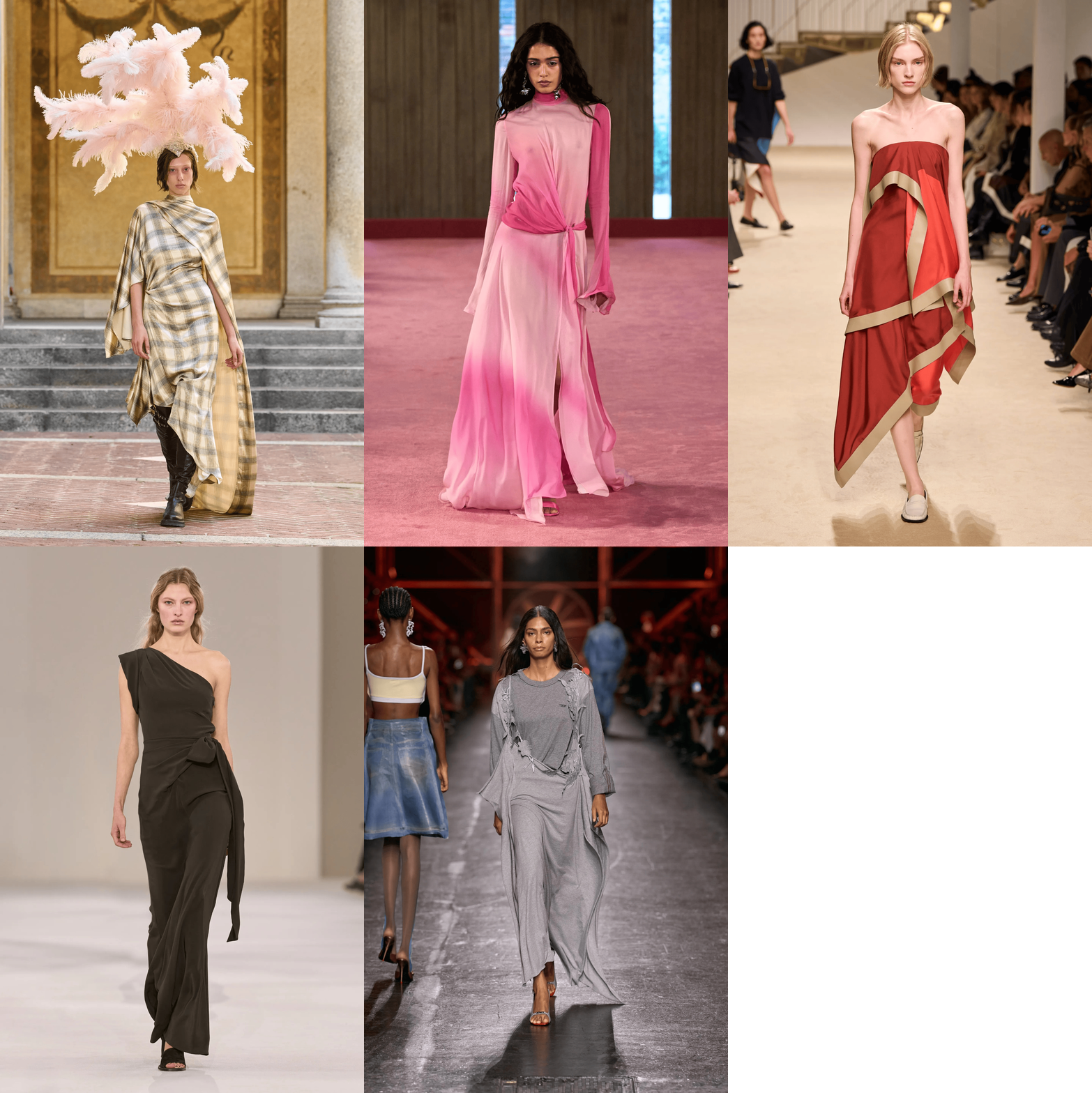
Maximilian Davis at Ferragamo didn’t quite make a garment of this kind, but he did send down the runway two outfits whose sleeveless jacket opened into a drape thrown diagonally across the chest, then falling into a train at the back. More interestingly, Galib Gassanoff based more or less his entire collection on this theme, drawing inspiration from the kelaghayi — the traditional headscarf of his native Azerbaijan, which local women drape over their heads and torsos — and which Gassanoff transformed and reworked into a series of looks that are highly covering yet extremely fluid. Other notable examples appeared at Tod’s and Moschino, as well as at Diesel, Marques’Almeida, Blumarine, and MaxMara.
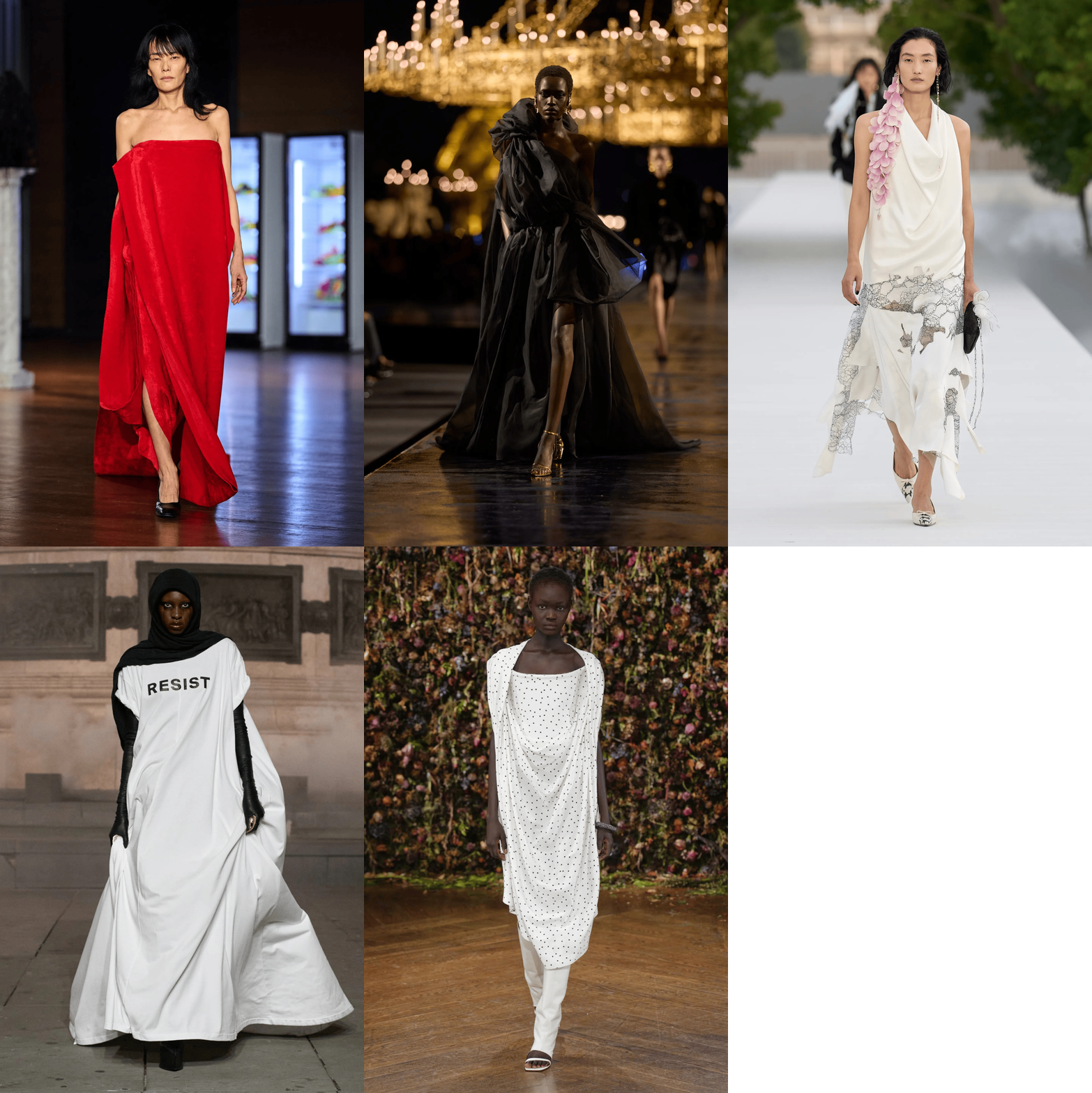
In Paris, a variant appeared at the latest Dior show and another at Marie Adam Leenaerdt. We also saw hyper-draped looks at Matières Fécales, most notably in the form of a large white tunic bearing the word “Resist,” and at Maison Margiela, where actual construction was present but a cascade of fabric creating concentric drapes masked the entire body. Finally, at the grand Saint Laurent show, several closing looks consisted of an enormous length of organza knotted and wrapped around the body.
Now, this type of “loose” garment — long, devoid of defined shape or structured silhouette, entirely draped and minimally constructed — has a long genealogy in fashion. Paul Poiret was the first to create Directoire-style dresses without a corset and therefore unstructured; in Italy, the creations of Fortuny could be considered forerunners. It is impossible not to mention Madeleine Vionnet and Madame Grès and, decades later, Geoffrey Beene and above all Halston. In the 1980s, the “A piece of clothing“ philosophy was applied by Issey Miyake, while later a similar taste for loose volumes appeared in Phoebe Philo’s Celine and at Rick Owens. But why is this look returning now?

One thing to note is that this type of garment tends to reappear at historical moments of rupture with structured, constricting fashion. The French Directoire style arrived after the Revolution and rejected the à-la-Marie Antoinette silhouette; Poiret and Fortuny wanted to free women from the many layers of nineteenth-century fabrics, just as Vionnet and Grès wanted to liberate them from corsets and crinolines. In the 1970s, a similar instinct for liberation prevailed, with an extra touch of hedonism. But today? The sheet-dresses seen this year could be a response not so much to market demands as to a set of cultural tensions we are living through right now.
The first concerns the control of the body. Compared to form-fitting garments, shapewear, hourglass silhouettes, and Ozempic dressing, pure drape does not impose a silhouette but instead follows or conceals that of the wearer. In Foucauldian terms, it is a rejection of “technologies of the body.” After decades of gym culture, filters, and bodies optimized for social media, these garments restore the idea of a body that wants to become “private” again, free to move without being defined by a shape. Furthermore, draping requires — by virtue of its very simplicity — careful, if minimal, fabric selection and construction, which means it could be linked both to the return to materiality in fashion seen in recent years and to the idea of effortless fashion. What could be more “effortless” than a sheet wrapped around the body, as if one had just gotten out of bed?
The same logic explains why the fashion of the past fifteen years — so “photographic,” designed to be seen and posted — is beginning to make room for an anti-screen aesthetic: draping derives its value from the weight of the fabric, from the way it changes as one walks, from the tactile experience rather than the image. It is a small return to the lived body as opposed to the represented body, as well as an enveloping form that functions like a cloak or a kind of soft armor. One might also hypothesize that, in an era when the conservative world relies on the aggressively feminine aesthetic of Mar-a-Lago and its vamps with stilettos and feline faces — dominated by the male gaze — a garment that dissolves the body also renders it less classifiable, and this ambiguity takes on a cultural and political significance, beyond the purely aesthetic.
Finally, draping could function as a status signal. In an era when brand rhetoric is returning to an emphasis on quality and when manufacturing is becoming increasingly vertically integrated to enhance the perceived value of labels, these garments also speak of alternative tastes and an interest in concrete craftsmanship. The return of the sheet-dress may therefore express a desire for clothing that is less normative, less performative, and less tied to a “managed” body. These are garments that promise protection, freedom, and simplicity — three things that, in uncertain times, feel like a luxury.