



We stuff them at the bottom of wardrobes to make space, we fill them with objects, books, and trinkets, we hate them when they slip off our shoulder while we’re trying to tie our shoes, we desire them wholeheartedly when they are gifted to us, but soon we forget about them. Tote bags are a design object that over time has acquired an inestimable value, evolving from a simple, cheap and sustainable cotton bag into a customisable canvas. As a perfect advertising vehicle, the tote bag has adapted to cultural shifts year after year, thus resisting the test of time. So much so that, in the first three months of 2026, it entered the Top 10 most searched fashion items online according to Lyst.
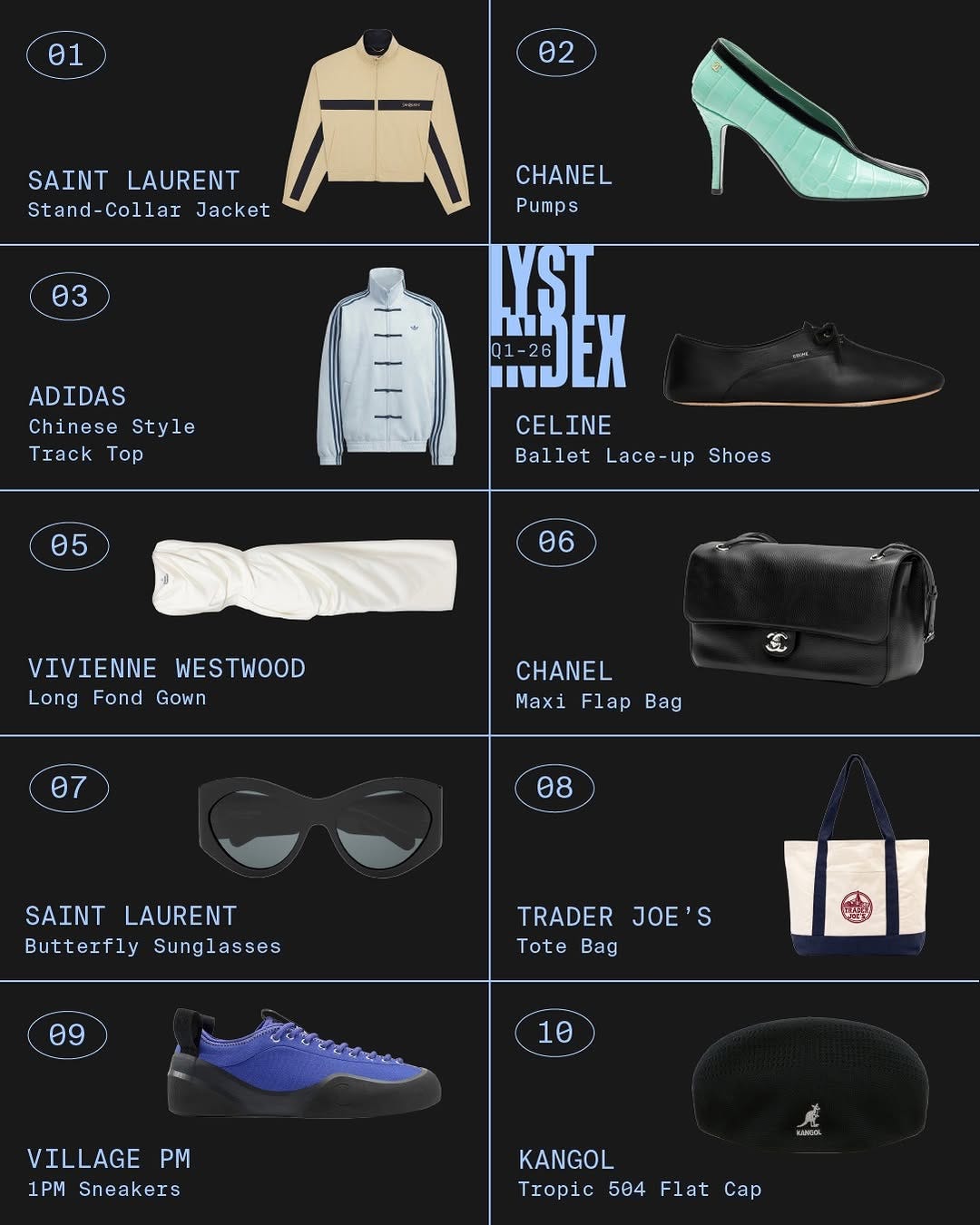
Between a pair of Saint Laurent sunglasses, Chanel pumps designed by Matthieu Blazy, and a pair of lace-up shoes by Celine, the Trader Joe’s tote bag has secured a place in Lyst’s Top 10 Hottest Fashion Products. It is not the first time a non-luxury item has entered the platform’s Top 10: this time too, alongside the aforementioned luxury items, there are more accessible options such as a Kangol flat cap and an adidas sweatshirt, but it’s the first time such an inexpensive item like the 3 dollar canvas bag from the American supermarket chain appears.
As the low price of the Trader Joe’s tote bag highlights, it is not luxury that contributes to the bag’s exclusivity. Initially available only in the United States, but now resold for hundreds of dollars on platforms such as the American eBay, the Japanese Mercari, or the Lithuanian Vinted, the bag has reached international status. Looking at it closely, it appears to be nothing more than a simple canvas grocery tote with thick handles that make it seem quite durable; not even its defining color schemes - such as navy blue paired with a red logo, or the pastel variations of the mini totes the chain has more recently produced (already sold out) - make it such a desirable object. And yet, people spend hundreds of dollars to obtain it from overseas.
Lyst explains the phenomenon behind the huge price gap between items in its latest ranking in a rather simple way - just two places above the Trader Joe’s tote bag is the Chanel Maxi Flap Bag, priced at $8,500. «This continued decoupling of status from price reflects a broader shift in how consumers assign cultural value to fashion. What unites the quarter’s hottest products isn’t a look, it’s a moment, a community, or a story.» Indeed, a short walk through central London is enough to understand that the Trader Joe’s tote bag epidemic is not just a Gen Z and Millennial obsession with accessible fashion, but something more. But is it really possible that cultural value carries so much weight?

It was the 1980s when The Strand, a historic independent bookstore in New York, launched a custom tote bag. Easily recognisable thanks to its large logo print, it soon became a status item among New Yorkers - first among Manhattan residents, then across the entire city, thanks also to new store openings in different neighborhoods of the Big Apple. Although the item represented a sustainable and practical alternative to less elegant plastic bags, the real success of the tote bag lay in the cultural meaning of the bookstore it belonged to.
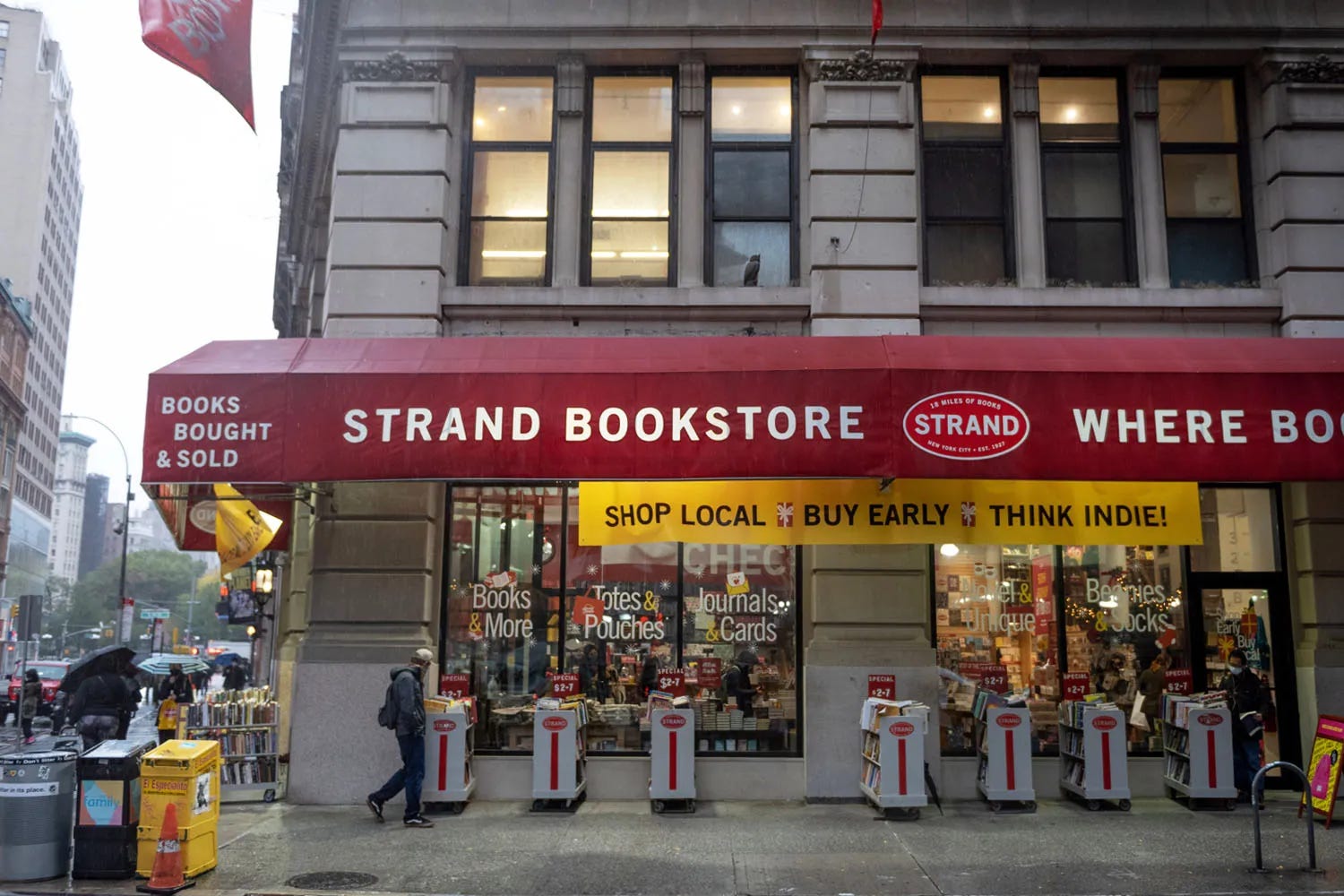
Wearing The Strand tote bag («the undisputed king of the city’s independent bookstores,» as described by the The New York Times in 2016) does not only signal a passion for niche literature, but also support for self-funded businesses, free from the commercial pressures of large publishing groups or investment funds. If the main priority of an independent bookstore is, at least on paper, the promotion of intellectual culture, its merchandise transfers that moral value onto the wearer: carrying a tote bag from such a store is, in this sense, a statement.
This is why, when in 2020 The Strand laid off most of its staff despite receiving a state loan and later invested over $200,000 in Amazon stock, many New Yorkers expressed disappointment toward the bookstore. By that point, the tote bag market was about to explode, a trend driven both by growing consumer interest in sustainable lifestyles and by post-COVID revenge spending. More shopping called for more shopping bags: quite an ironic paradox between unchecked consumerism and conscious practice.

The Strand and Trader Joe’s are not the only businesses to have seen their canvas bags transform from advertising initiative into a full-fledged business. The tote bags of Shakespeare and Company (the Paris bookstore in the 5th arrondissement that in the 1920s was a meeting place for authors such as Ezra Pound, Hemingway, and James Joyce), featuring the store’s façade in blue, have given rise to a counterfeit market; the same has happened with Daunt Books, an independent London bookstore with striking oak interiors.
Also worth mentioning is the tote bag of The New Yorker, sent to anyone who subscribes to the magazine but also sold online for hundreds of dollars, as well as the thousands of personalised bags distributed every year at the Fuorisalone to anyone willing to endure hours of queueing.
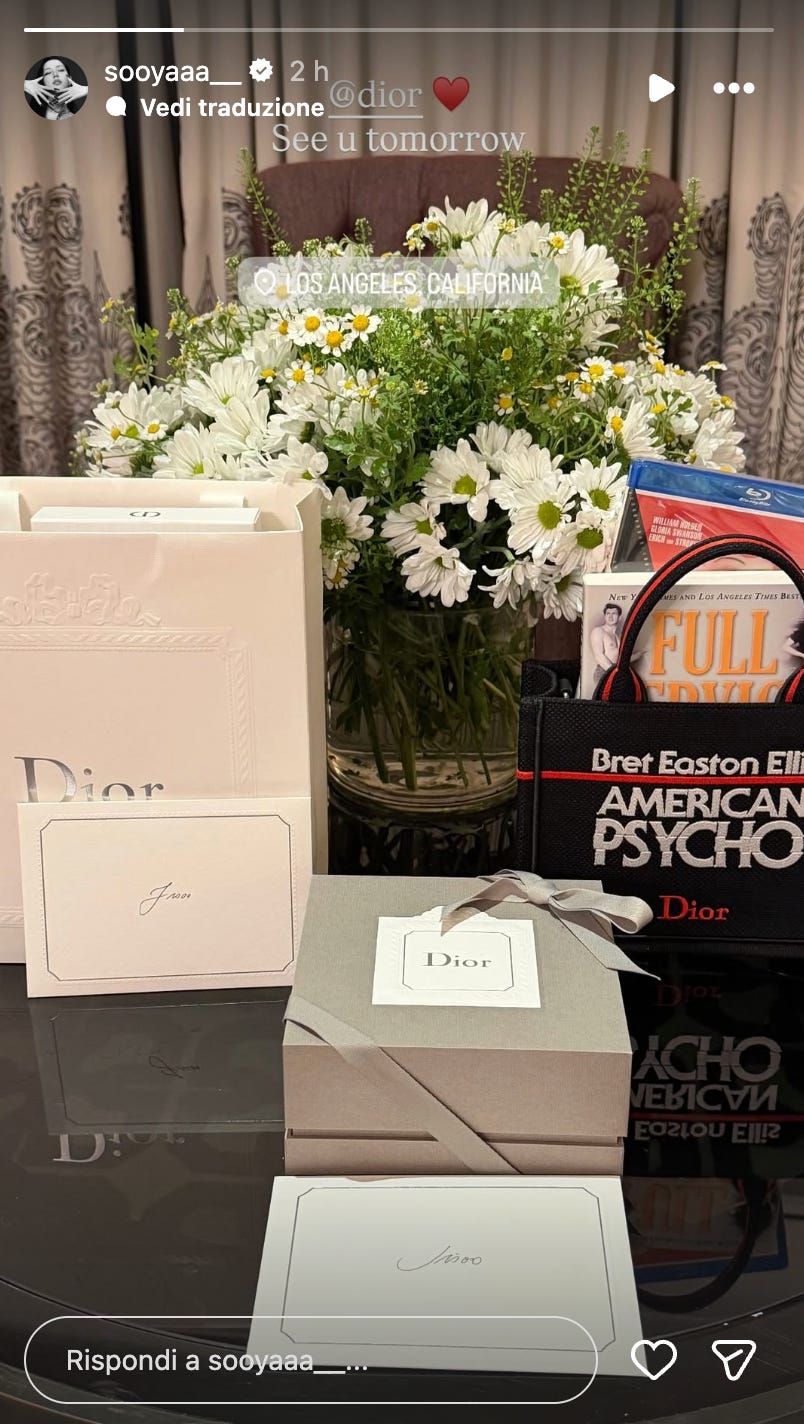
The cherry on top of this list comes from Dior, which after selling cotton bags with its logo for years, under the creative direction of Jonathan Anderson has printed iconic literary titles - like Dracula by Bram Stoker, Madame Bovary by Gustave Flaubert - on cotton shoppers sold for thousands of euros. Not only that: in the welcome gift offered by the Maison to guests of today’s Cruise 2027 show, May 13, a mini version of the bag featuring the title American Psycho by Bret Easton Ellis is included.

In short, whether obtained through a subscription, the purchase of books, attendance at a conference, investment of savings, or an invitation to an exclusive fashion show, the tote bag must be earned. And perhaps this is exactly what increases its value: it is not an object recognizable to everyone, but to a restricted group of people who have taken part in a movement - be it political, aesthetic, or moral.
In the case of The Strand, wearing the tote bag signals support for independent literary activity; in the case of Trader Joe’s, it shows that one has shopped at one of the most famous organic supermarkets in the world (in one of the least “organic” countries in the world). «Health is wealth,» as English speakers would say, and said «wealth» is able to grow even more when, alongside health, a hefty price tag is added.


Monocle describes tote bags as «the concert T-shirts of our era»: some wear them out of belief, others to pose, some by accident, others to show off their wealth. Considering that just three years ago Saint Laurent was selling Nirvana T-shirts for $4,500 while Bottega Veneta was «paying homage» to The Strand with a leather replica of the famous tote bag, it seems that every street-born trend is now destined to the same fate.
As one Reddit user advises to an aspiring tote bag producer: «If you make it super niche to a video game, tv show, movie, or anything like that, you could for sure have a successful business.» It really is that simple.