



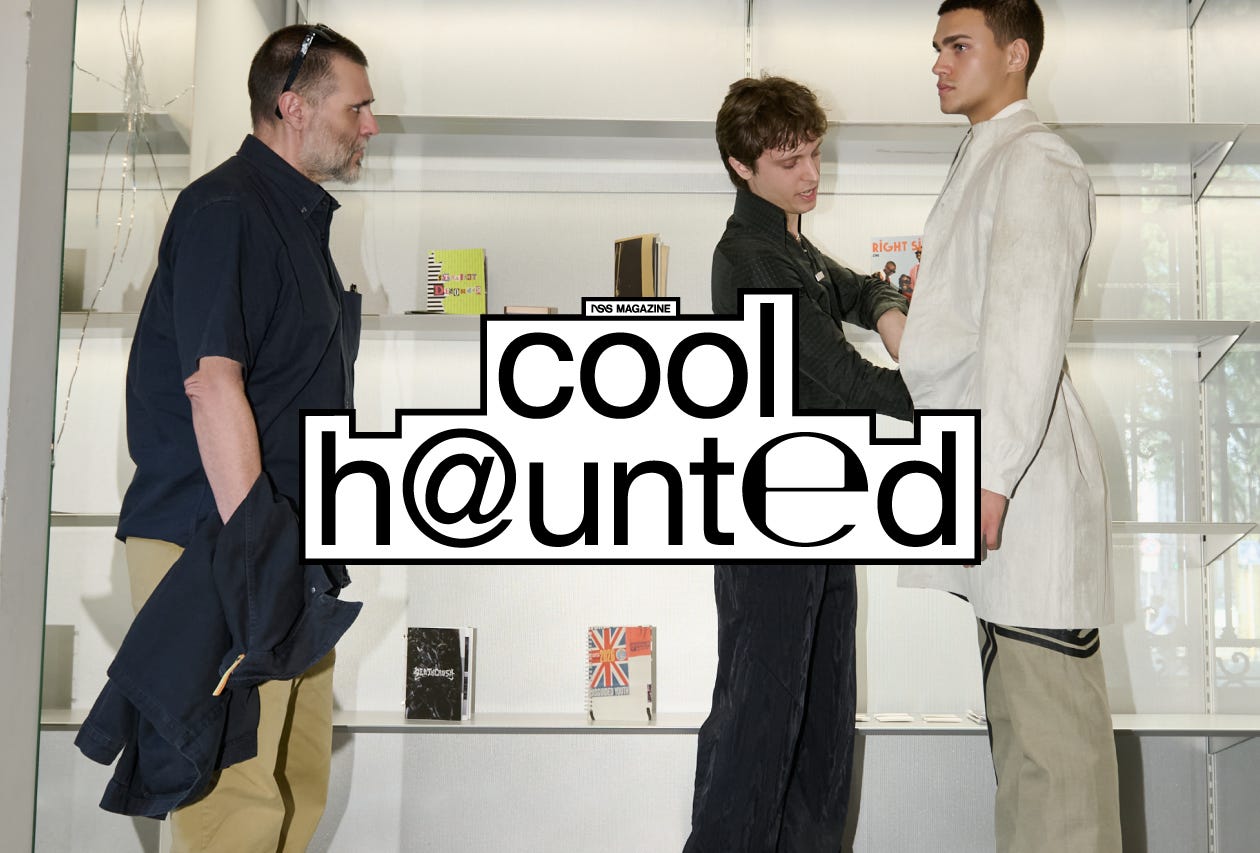
When people talk about fashion archives, everyone’s mind immediately goes to runway pieces. But not Andrew Groves, founder and director of the Westminster Menswear Archive, the UK’s first public menswear archive. What interests him most is what fashion can say when placed in the context of reality and history, the testimony it can offer, not so much of the abstract fantasy of certain designers, but of how a particular garment, even an anonymous one, can tell the story of the intersection between dress history and society. «There’s something nice when you go to an archive: you arrive with an idea of what might be in there,» he told us. An idea, parenthetically, that always gets overturned in some way.
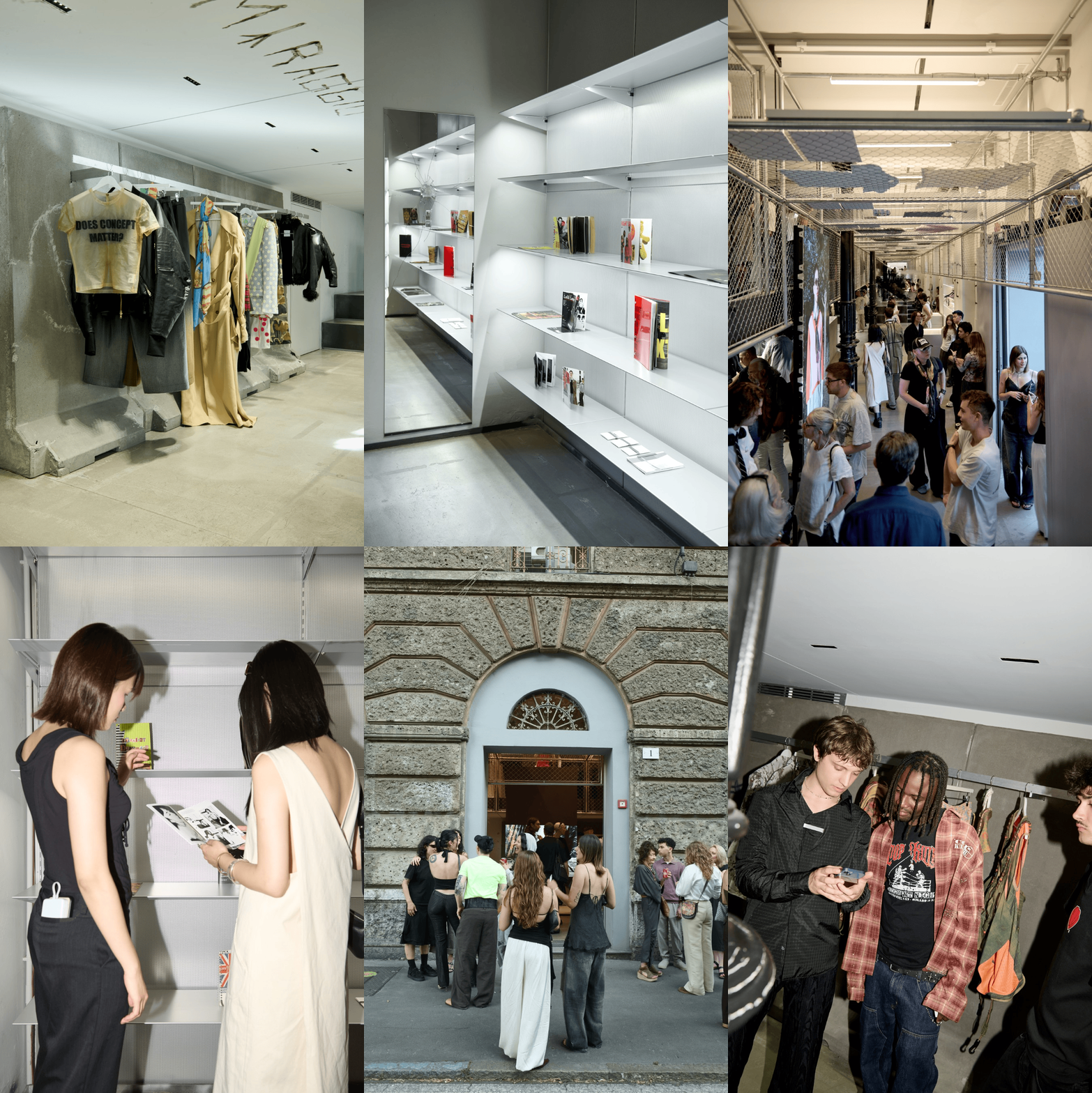
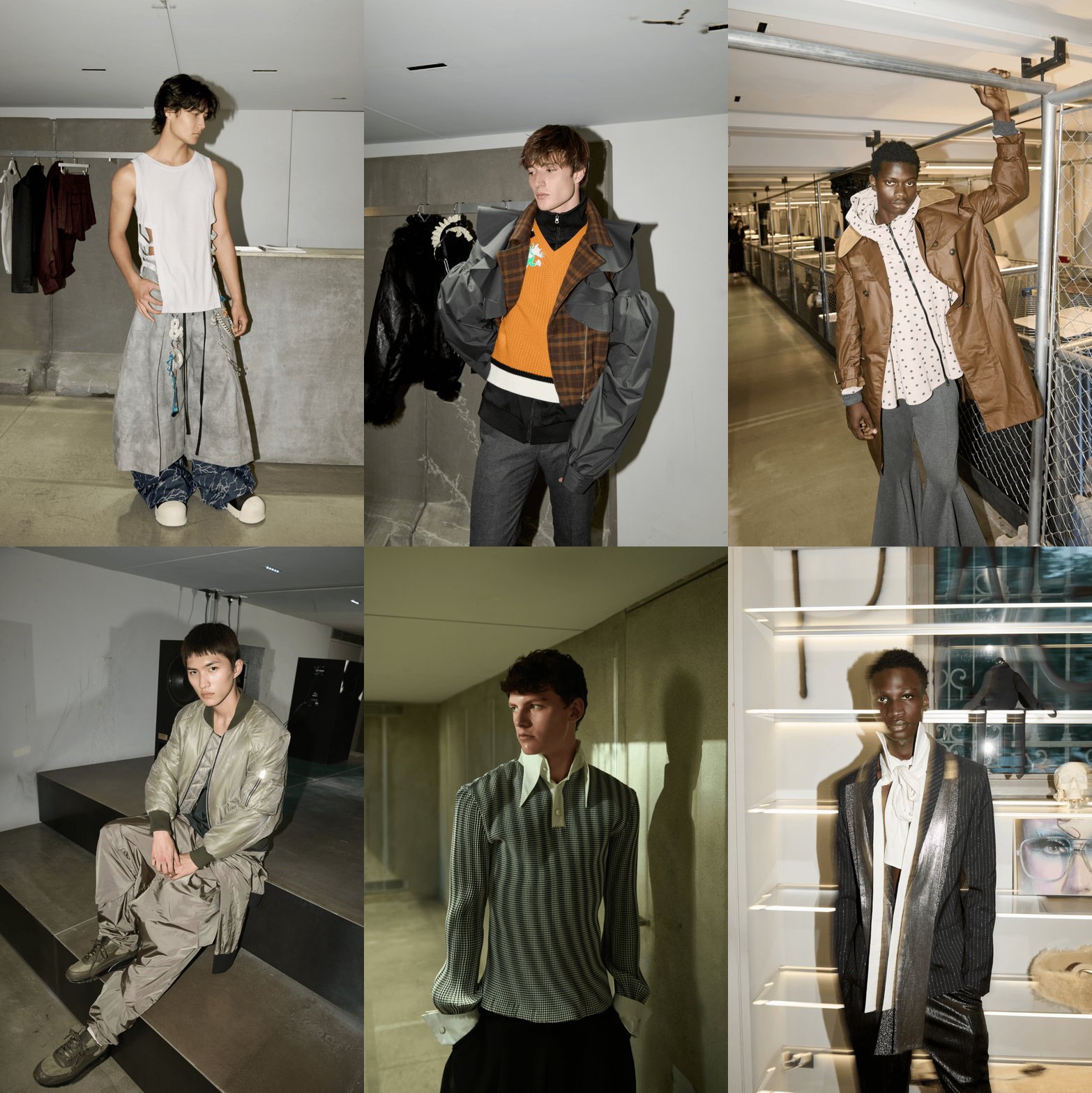
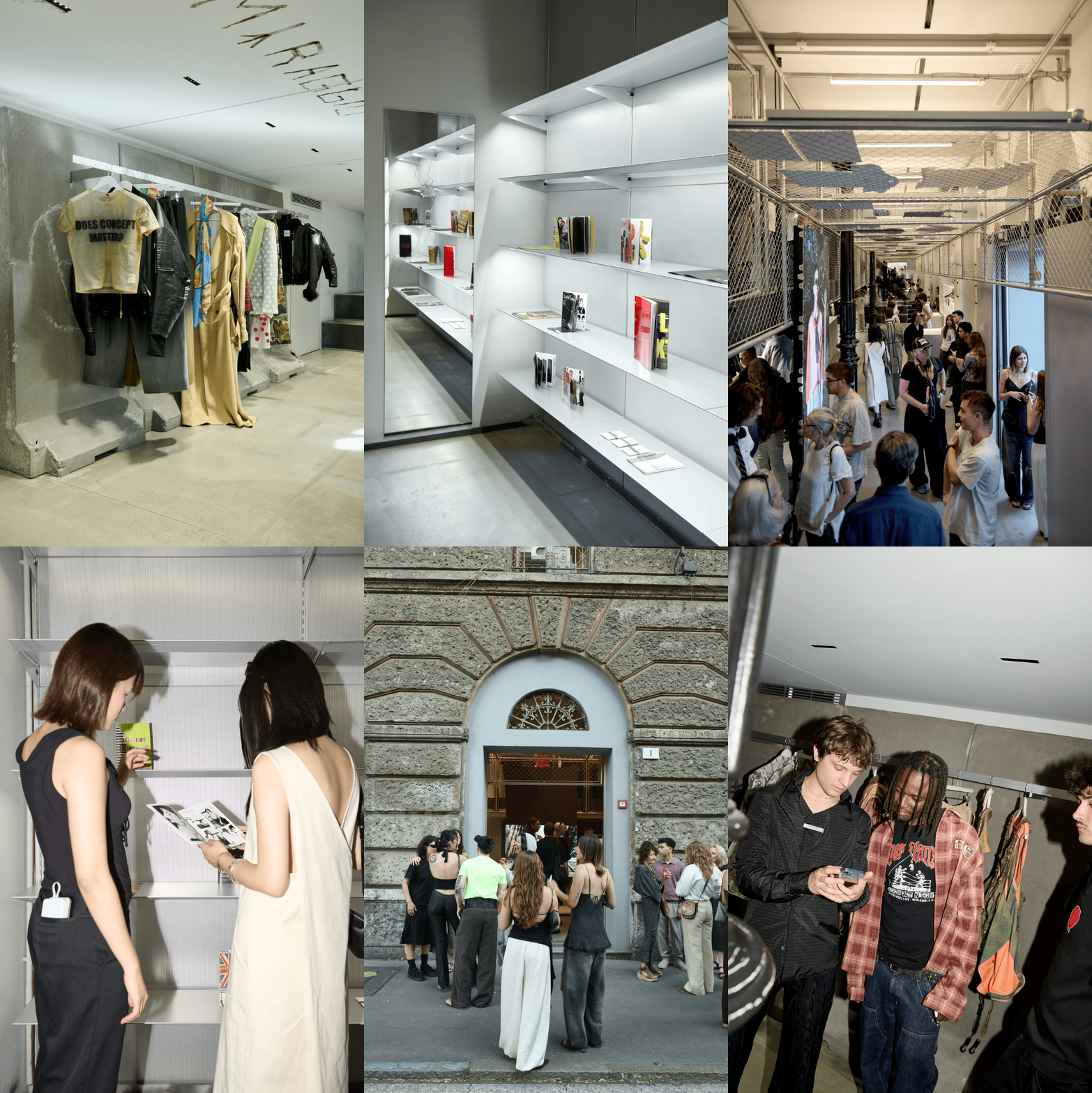
On the occasion of Milan Fashion Week Men’s SS27, Groves and the University of Westminster brought the final collections of Master of Fine Arts students to Milan, to show them in the spaces of the Slam Jam Center in Brera. Here, alongside the collections, an installation called Visible Systems was created, in which ten objects from the Westminster Menswear Archive are shown alongside ten objects from Archivio Slam Jam through a series of thematic pairings. The idea is to create a series of thematic pairings that read fashion as a set of systems: garments that conceal and alter the body, surfaces that produce meaning, visibility that shifts from a simple function to a tool of identification, social roles and hierarchies, equipment for movement and work, organisation of space and mobility.
At the same time, many of the pieces on show tell how the design process evolves through prototypes, how simple signs on ordinary garments can change their meaning, how design identity circulates through branded objects, and how copies and imitations manipulate the language of branding to generate new meanings. A selection that includes items such as knock-off Comme des Garçons and Supreme T-shirts, but also tambourines created by Lidl for the Oasis reunion, police riot helmets, functional reflective garments paired with Alyx and Been Trill samples, as well as prototypes, staff garments, and customised football shirts.
To better understand how this exhibition was put together and what idea of fashion lies behind it, we met Andrew Groves at the Slam Jam Center to ask him a few questions.
What interests you about preserving and archiving mass-produced products?
Andrew Groves: If it’s a one-off, it normally means it’s a show sample. No one ordered it, no one’s bought it. If it’s production, it means someone ordered it, someone bought it, someone chose to wear it. It had an audience. I think there’s a danger that you get seduced by the show and runway pieces. But what matters is the fact that it had an audience.
If you think of that McQueen’s Dante masks or the Mr. Pearl corset, that’s amazing. But there’s only one of those. I’d much rather see what was designed from that, which then became a product that people could buy. Margiela always says his garments are proposals until they get bought. And for me the interesting thing is that as soon as someone wears it and they’ve paid for it, it becomes a garment, clothing. Before then, it’s just an idea. It’s the act of putting things together that turns them into fashion, because you’re fashioning it.
So much of fashion exhibitions is based on high-end womenswear, making you feel: aren’t you lucky to see this very rare Dior dress? Sometimes when I look at couture shows, I think, well, this is great on one level, but what relevance does it have to anyone I know? I think this is a way of thinking about what these things mean, and what they mean when you put them next to other things: a Louis Vuitton show jacket next to the Lidl trainers. By physically putting them in the same room, it changes both. What they’re doing here is very much about a culture that’s based around dress, fashion and clothing. Designer and disposable garments exist in the same world, and now they exist in the same room — in the archive.
What is it about non-fashion garments, like the riot helmet or the Covid T-shirt, that interests you?
Andrew Groves: I think these are garments that are going to disappear very quickly. But they’re of a moment, so it’s important we capture that. And although they’re only of a moment, they still operate within the system of military garments, and their meaning comes from the person that wore them. There were about twenty people that all decided to come up with a design for that T-shirt. So it’s design produced by people who aren’t trained designers. They used that military graphic idea about how you represent something new, like Covid. But they’re still making aesthetic decisions within a system about what’s possible to manufacture. That’s why I’m interested in the distinction between clothing and fashion.
It’s also interesting to have the prototype and then the final production, and to see what’s changed and why it’s changed. Normally we’re only showing fashion as being successful and spectacle and amazing. Whereas things that aren’t quite doing that, I think, are far more interesting.
And what do you find interesting in the more unusual objects — the football shirt, the Lidl merchandise, the branded carrier bag?
Andrew Groves: We’ve got a huge collection of football shirts, and nearly all of them are not player-worn shirts because it’s about thinking about what value does a garment have, and how do you make a garment have value. If its only value is that it was worn by a person, the value is the person. It’s not the garment, is it? The value is transferring from the person to the garment. The referee’s shirt with the all-seeing eye graphic, paired with a bomber jacket featuring the same motif, both are working out ideas about what a garment can be.
This is the idea of things that are ideas of fashion that circulate in ways that maybe are unusual. The carrier bag, the idea of the carrier bag as sometimes as important as the garment within it, because it’s something you show off and people understand: oh, you’ve been to this shop, you’ve bought something. And then there’s the Lidl tambourine, produced for the Oasis reunion last year, the product of a supermarket that most people think exists outside that hype culture, but this is completely swept up in it.
What is the function of such a heterogeneous archive?
Andrew Groves: It’s quite precise in terms of what’s useful for teaching students, and what’s interesting that’s also happening in industry that we should capture. By forcing things together, I think it gets students to think about things they might not think about. There’s also that tension between what brands want people to focus on and what we might focus on. Brands only want to tell you the story that works for them now. Quite a lot of our collecting [which also includes commercial ready-to-wear garments, ed.] is making sure that doesn’t get lost. We collected Covid masks because I thought: two or three years from now, brands will pretend none of this happened and won’t want anyone to know about it.
So you created the archive primarily to improve access to garments?
Andrew Groves: That’s one of the reasons. Students were seeing the garments on the runway, but weren’t seeing them even in the shop. What the archive does is force you to engage with all these different garments and find your own route through them.And I also realised that everyone thinks everything’s available because it’s available digitally, without realising that things disappear digitally all the time. People build up their Instagram feed and suddenly it’s gone.
Our archive goes from what you might call designer — from a Cold War jacket to Vivienne Westwood — then garment types: tailoring, shirting, trousers; to activity: motorbikes, hunting, hiking; to utilitarian: uniforms, an underground train driver’s uniform, military. They get drawn in by what they think is fashion, and then they actually get excited by what the clothing is. And then think: my job as a designer is how to take the idea of clothing but to turn it into something whose meaning is relevant now, which makes it fashion. Have you made clothes, but have you made fashion? What ideas are other designers thinking about that you’re adding to? And that’s the hard bit, isn’t it?
A good student or a good designer is someone that understands the fashion system and where it is, and can see another way it could go, like Margiela, who really understood how that system works. The archive helps us show them things they might never have seen and say: this could be a positive thing, this could be a possibility. How radical do you want to be?
And how have you seen fashion change in recent years?
Andrew Groves: Surely one of the roles of design is to think about all the things going on. Ideas about gender and sexuality and all of that happening in the wider world, with fashion designers really thinking about the body and how they engage with that as subject matter. I don’t think that discussion occupies the same central position it did in the 1990s, when many designers were engaging with those questions directly. So it felt like there was a quite healthy discussion between those different designers. That doesn’t feel like it’s really happening anymore. Students come to us and they want to be a creative director — and what do they think a creative director is? Do they not think it’s part of a system that doesn’t really work?
In recent years the industry has just been trying to push prices up as much as possible just because they’re luxury, rather than thinking: what am I getting in return for that, better creative thinking, better use of materials, or not? That’s just exploitation, isn’t it? We’re saying the branding is worth more, so we’re going to charge more for that. I’m much more interested in who’s doing things that are more interesting in terms of their thought process. You could come back to Hussein Chalayan and McQueen, couldn’t you? What was interesting was what they were thinking fashion could or couldn’t be. People might not buy those clothes at the beginning, but you’d look at Hussein and think: my God, there’s someone really thinking about it.